I was recently interviewed by Yashika Begwani who hosts the Voice of Achievers podcast
Nov 22, 2023
Mar 23, 2023
Event Report - Cornerstone Connect Live at Mumbai

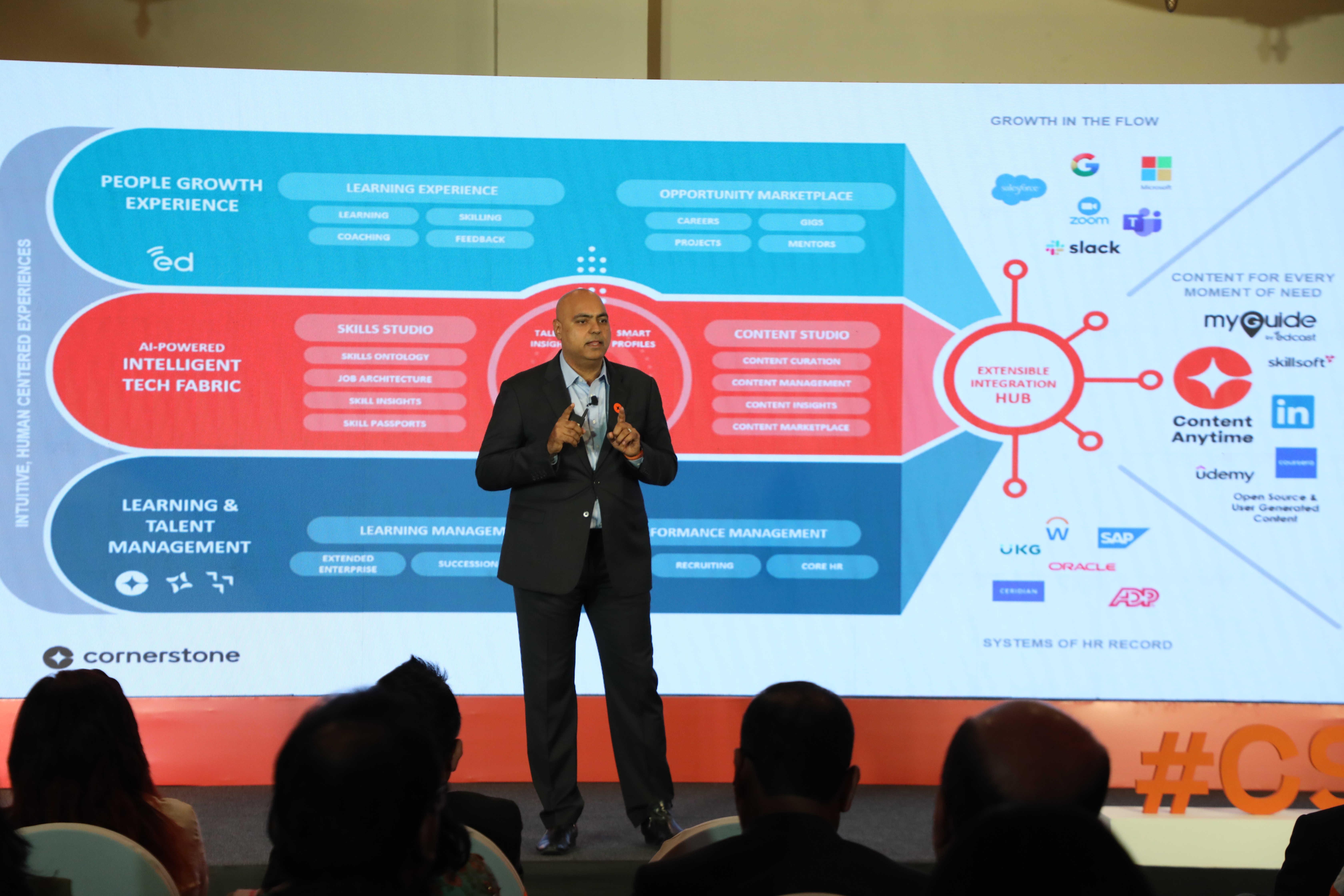


On February 15th, Cornerstone's Connect Live event was held in Mumbai, India, where CEO Himanshu Palsule emphasized the critical skills gap in the country and the need for learning to address it. He highlighted that not only does the skills gap impact individual employability, but it also affects the growth and productivity of the Indian economy. Cornerstone, with EdCast, SumTotal, and Saba, have become the largest learning platform company globally, serving 7,000 customers and over 100 million end-users.
He further stressed upon the democratization of talent and how employees expect their organizations to take initiatives in skilling them. He warned that companies that fail to invest in employee development risk losing out to competitors who do and urged organizations to act. Himanshu also expressed his belief that technology plays a significant role in addressing this issue and presented the vision of the Cornerstone Talent Experience Platform.
In the keynote, Yashwant Mahadik, the Global CHRO of Lupin, shared his experience and discussed the complexity of a global LMS rollout. He highlighted the challenges that leaders will face in the future and predicted that immersive learning using virtual and augmented reality will be the next big thing. Mahadik emphasized the need for leaders to be in tune with technology to remain relevant in the future.
In the product deep-dive session, Cornerstone’s Chief Product Officer, Kartik Suri unveiled Cornerstone's Talent Experience Platform, where the best-in-class learning, performance and talent management capabilities are married to holistic, highly engaging, personalized people growth experiences, interconnected by intelligent tech-fabric with AI-powered skills, highly context-aware content, both of them fed through a people-intelligence data layer, all built on an open ecosystem with an extensible integration hub.
In the CXO panel discussion, Nishchae Suri, MD at Cornerstone India, began by sharing insights from the Learning Health Index survey, which revealed that corporate India operates at only two-thirds of its potential, despite 82% of employees expressing a desire to take ownership of their learning. The panel discussed the need to bring enterprise technology up to par with consumer technology, with Mohit Kapoor, CTO at Mahindra Group highlighting how his team tracks Employee Waiting Time, a metric that measures the time it takes for a request to be approved from the time it was raised.
Carmistha Mitra, CLO at Axis Bank emphasized the importance of technology providing hyper-personalized data to both employees and the business while making supervisors accountable for their team's learning. Animesh Kumar, President - HR and Transformation at Zee stressed the crucial role of managers in facilitating learning and development, describing them as the linchpin for success in this area. Abhilash Misra, CEO of NSE Academy spoke about the importance of investing in one's own learning through a Systematic Learning Plan (SLP).
In the Customer Success Story session, Prateek Mehta, head of Mahindra leadership University shared insights into how Mahindra Group re-imagined learning using EdCast by Cornerstone’s Learning Experience Platform. In a refreshingly candid presentation, Prateek discussed the mistakes made and the lessons learned along the way, ultimately resulting in an impressive adoption rate of 80% and a Net Promoter Score (NPS) of 66.
The event concluded with an inspirational talk by Ashish Vidyarthi, an actor turned speaker, who shared his personal journey of finding his voice by remaining open to learning, regardless of where he found himself in life. He emphasized how technology has simplified life and provided opportunities for individuals to reinvent themselves, provided they possess a curiosity and willingness to learn. His talk left the audience feeling inspired and motivated to embrace continuous learning in their personal and professional lives.
Looking into the future, with the potential to be a game-changer in the future of learning, talent, and work, Cornerstone's Talent Experience Platform (TXP) could revolutionize the way individuals approach personal and professional development while equipping businesses with the necessary tools to thrive in an ever-changing landscape.
To learn more about Cornerstone’s Talent Experience Platform, visit www.csod.com

Jul 26, 2022
How can Influencer Marketing and Employer Branding help you win the talent war
My conversation with Rohit Munjal of Sprinklr and Sarbojit Mallick of Instahyre
Jul 8, 2022


My interview with Priyanka Dutta on her YouTube channel #CoolTalksWithPriyanka
It was an absolute pleasure to be interviewed by coach Priyanka Dutta, who asked me questions that only an OD consultant could ask and got me thinking more than I usually do covering a big gamut of topics
By the way you can find all the videos of my talks and interviews down the years here on this list
On the SHRM India HR Influencer list, again
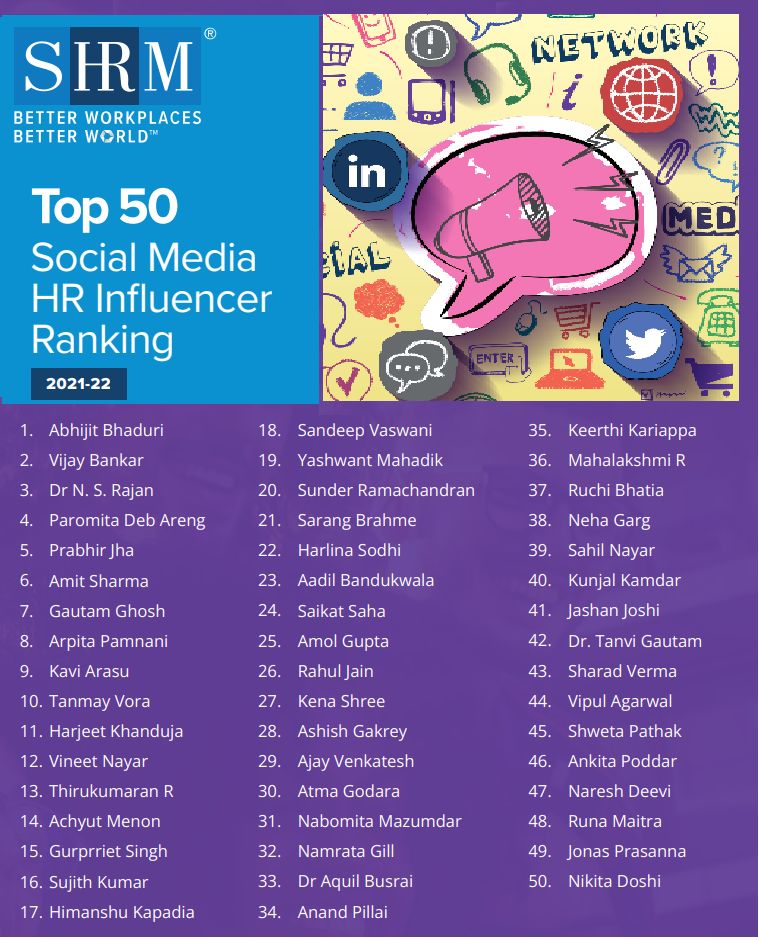
So on 20th May, SHRM India unveiled its list of the 50 HR Influencers in India for 2021-22 during the SHRM Tech Conference and yours truly was on the list again :)

The full list of the 50 influencers are:
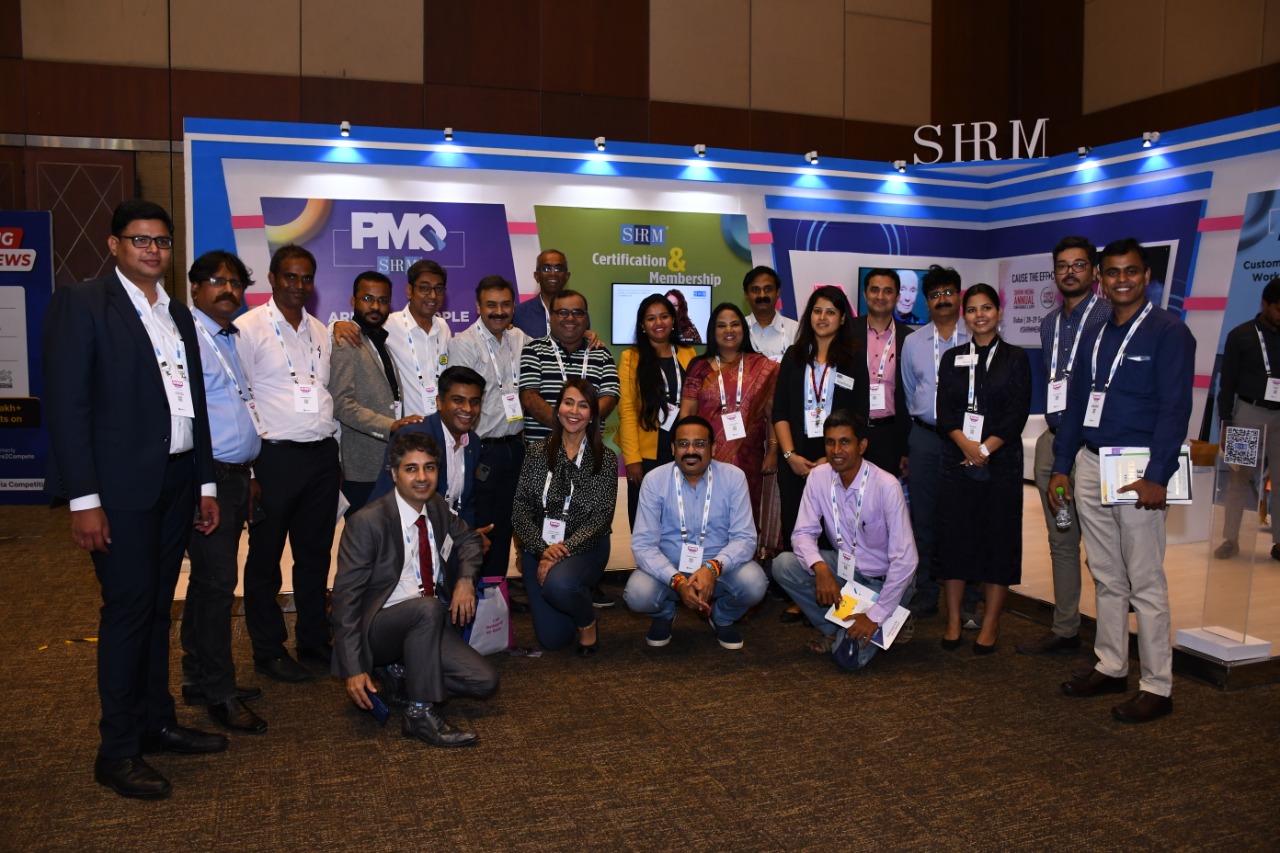
Some pics from the Conference:


With Marshall Goldsmith and Jaspreet Bakshi

The SHRM Influencers

This was a crazy POV pic :)

A well-behaved pic of the influencers


A crazy pic of the influencers :)

with Anish and Sheetal

With Ayushi, CEO of OpenOffers, a HR Tech startup and co-founder Vishal

You can find my Tweets about the event here, some more photographs in those tweets
My podcast interview on Voice of Achievers Channels

My first podcast interview is now available on Voice of Achievers channel on
(this is the link to be used for anyone who does not have any of the above podcast applications; this does not require an app download and one can listen to the episode seamlessly without an additional download)
Aug 18, 2021
Lessons from the pandemic about layoffs

One of the unfortunate truths of business is that businesses go through cycles - during periods of growth people are hired, however when businesses go through downturns it is not easy to let people go.
While many organizations often say that people are their most important assets - the truth is that people are not like their other assets. Capital like land, machinery can be resold, but people cannot. The time and resources invested in hiring, training and developing people is only realised by their performance. When business declines due to whatever circumstances, people costs have to be written off.
As many business leaders found out during the first wave of pandemic, letting people go is not easy. It’s tough to tell people that they are being let go for no fault of theirs - either because of an external event like the pandemic or internal changes like a change in strategic direction (or as is more commonly known these days, as a pivot)
Layoffs must be (to borrow a term from the hospitality industry) HWC - Handled with C - where C stands for Care, Compassion and Communication
Layoffs in the new normal are different than earlier. That’s because conversations are mostly virtual and can cause people who are uncomfortable with dealing with empathy to deliver it coldly - or be perceived as cold by the people getting laid off.
In fact, a year ago, the phrase “Fired over Zoom” gained prominence in the popular lexicon as many people including a renowned journalist Jeffrey Toobin of the New Yorker used the phrase to document in public posts about the nature of their dismissals.
Let’s see what each of the C’s mean
Care
The leaders in the organization must care about their people as human beings and not just their skills, talent or to see them as a pair of hands or “bodies” (as they are egregiously referred to in certain industries)
This does not happen in a vacuum, however. An organizational culture supported by structures and processes that recruit, promote and develop managers and leaders who care for their people.
You know a leader and manager cares about their people when they know each of their team members and their specific life as well as professional situation.
Compassion
Compassion in organization is “empathy in action”. Empathy is putting oneself in the shoes of others and understanding the emotion they are going through. It means listening to the viewpoint without judging them. When an employee is given the negative news that they along with others are going through, they will invariably go through the five stages of grief as stated in the Kubler-Ross model - denial, anger, bargaining, depression and acceptance. A compassionate leader and manager needs to understand this and be with their teams as they go through the stages.
Communication
In these times when layoffs probably mean they will happen remotely - there are some principles. When in the middle of a difficult conversation, it’s common to focus solely on yourself: your ideas, your viewpoint, your feelings. But a “me-centric” approach can backfire.
Before communicating, leaders should have all the facts ready and anticipate what kind of most common questions employees will ask. It is imperative to get details from the HR, Legal and Finance groups on how the layoffs will be handled smoothly at a process level - so that people do not have to run from pillar to post, after they have been let go, to get what is rightfully theirs. The message delivered should be clear, concise, and unequivocal. People should not be left confused about their status. However, this does not mean that the message should be delivered coldly. If it is delivered via a video conference eye contact needs to be maintained.
When Airbnb announced that it was letting go of employees, CEO Brian Chesky authentically and transparently conveyed the company’s decision-making process and values. You can read the full text here https://news.airbnb.com/a-message-from-co-founder-and-ceo-brian-chesky/
How can organizations support the employees who are impacted?
According to this article by Randstad Risesmart: “When the difficult decision to lay off is made, employers who provide support for those impacted as well as those remaining, are employers who will be regarded as some of the best places to work when the time comes to hire again.”
This can be done by partnering with an organization that can offer career guidance and outplacement services to the impacted employees. This will ensure that professionally trained coaches and experts will be on hand to help with the planning and preparation, including manager notification training to ensure smooth transitions for the company and the impacted employees.
Conclusion
Layoffs are an unfortunate truth of businesses and while regrettable, business leaders can deal with it by treating their people with enough care, compassion and correct communication. A best practice that emerged was many leaders publicly sharing a list of impacted employees and urging other organizations to hire them. By doing such actions leaders display their commitment to their people.
Suggested readings
https://www.randstadrisesmart.com/blog/preparing-layoff-6-tips-employees-risesmart
Jun 22, 2021
Building a strong employer brand - My interview with KekaHR
The folks at Keka HR interviewed me on my thoughts about employer branding
Subscribe to:
Posts (Atom)