FCNow points to the Knowledge@Wharton article is your HR department friend or foe?
Some interesting bits from the article:
Dealing with these types of HR departments "is like going to the dentist," says David Sirota, author of The Enthusiastic Employee: How Companies Profit by Giving Workers What They Want (Wharton School Publishing). When people are asked to rate the quality of different functions within their company, he adds, "IT and HR are repeatedly rated the lowest."
HR was seen as a way to advocate for, and protect, employees -- an orientation that became "quite explicit in the 1950s and beyond as part of an effort by management to prevent unionization." But more recently, and especially over the past decade, the threat of unionization is much less widespread even as technological advances have made employees more expendable. The "social contract" between employee and employer -- in which companies provided lifetime employment to its workers in return for loyalty and commitment to company goals -- has ended.
The classic area where HR leaders can provide strategic input is "anticipating a merger," says Walker. "A very well-defined set of opportunities and experiences exists, including assistance in valuing the merger, developing the integration plan, communicating with employees, matching talent, and so forth. Some company HR departments play a key role here. In others, they are still observers, cleaning up the mess afterwards."
Jack Welch, former CEO of General Electric and author of a book entitled Winning, noted in a recent interview that "outside of the CEO, HR is the most critical function in any company. Development of leaders is the ultimate responsibility of every CEO and thus is an integral part of HR. I saw my job as allocating people and dollars to opportunities. I wasn't designing products. I was putting people where I thought they were right for the job. I did that with my partners in HR." HR evaluation systems, he says, "should be rigorous and nonbureaucratic" and monitored as closely as financial reporting is now monitored under Sarbanes-Oxley.
Critics of the way HR has developed over the past decade suggest that HR has become a "handmaiden of management," more concerned with carrying out directives from above than supporting the needs of employees.
The system could be better if it were two-tiered, Kraft suggests. "Somebody has to develop an alternative dispute resolution system or some mechanism that allows employees a voice.... I still view that as a part of the HR function, although it doesn't seem to be happening."
When HR managers "say they want to be business partners," suggests Sirota, "what they mean is they want to work for management. Most companies say employees are our greatest asset, but what they really mean is they are our biggest cost."
Jul 29, 2005

GlobalCorp?
Dave Pollard has a scary thought...
He then presents its Annual Report's Management Discussion and Analysis section. All I can say is that thankfully GlobalCorp must be ages away from becoming a reality. But there are echos in GlobalCorp in each country and a lot of mini-GlobalCorps in the form of various MNCs operating in the world.
What would happen if a single corporate consortium -- let's call it 'GlobalCorp' -- achieved its ultimate goal: a 'corner' on every business (including the underground economy) everywhere in the world?
He then presents its Annual Report's Management Discussion and Analysis section. All I can say is that thankfully GlobalCorp must be ages away from becoming a reality. But there are echos in GlobalCorp in each country and a lot of mini-GlobalCorps in the form of various MNCs operating in the world.
Jul 27, 2005
Book review of "Mediocre But Arrogant"
As a category the MBA seems under threat, with even the likes of Henry Mintzberg (who gets quoted by all the MBAs) training his guns on them. In India, we are subjected to conjecture and envy when the MBA salaries come out in Feb-Dec. No wonder that the common man questions "Who are these guys?"
Abhijit Bhaduri in his book "Mediocre But Arrogant" tries to answer that question in a humanistic way.
Mediocre But Arrogant is the story of Abbey an unambitious drifter who was good in extra-curricular activities during his BA (Eco) days because he needed the cash from inter-collegiate festivals to pay for cigarettes and coffee. He has clueless about what he wants to do after his graduation and serendipitously lands up for a course in HR from the Management Institute of Jamshedpur.
The book is how Abbey navigates his way through the two years of MBA in Jamshedpur, the girls he falls in love with, the friends he makes, and his journey from a youngster without any clue, to a person who doesn't mind flouting the rules to survive and towards the end of the book, the signs are evident that he's becoming more self-aware and possibly more responsible...?
But the book is more than just about Abbey, it's also about his interaction with systems (like Delhi University and MIJ) and people (from Profs like the respected by all Haathi and feared by all Chatto ) and classmates (from the slimy Gopher, the know-it-all Rusty, the "brains" Sethu). Abbey of course has a major soft spot for the women, and they have a profound impact on him, giving rise to some of his most introspective moments. There is the 'girl back hom' Priya, Ayesha 'the coquette' and Keya 'the lovely'. In each one of them Abbey discovers a human being beyond just the bracket they get slotted in by the boys.
What Mediocre But Arrogant does is that it humanizes the MBA from the analytical left brained creatures of popular media to normal youngsters who have their own set of dreams and insecurities.
While the book is based in the 1980s the world of MBAs have changed, but there are deeper roots that run through. For example, Bannerjee Babu, who does student's assignments and projects for a fee and is the repository of all papers churned out in the past is a human figure of cyberspace which today's MBAs rely so much more on.
What I would have liked in the book is more stories about Abbey's classmates. While the book is written in the first person by Abbey who is quite self-centred stories/episodes about fellow classmates and professors would have made the book much more engrossing.
The humor is always spot on, and anyone who's lived in a hostel with weird people will surely be able to identify with the book. Of course, I think the people who should really read the book are the ones who aspire to do an MBA. The book shatters a lot of myths around MBAs and yet does not demonize them. The cartoons are really good...I loved the ones on the MIJ anthem, OB notes and the Strategic Planning notes. Go ahead, check them out!
Abhijit tells me that the second book will be about how Abbey copes with corporate life. I can't wait for it now ! I want to see what Rusty, Gur, Gopher, Abbey, Ayesha, Sethu will turn into in five years...(you know the campus interviewer's always-in-fashion question..."where do you see yourself in five years?" Will Fundu become an NGO worker? Will Rusty actually move towards consulting? Will the 'jugaadu' guys do better than the ones who studied hard? I would love to know all these... How will they deal with strikes in the workplace? With firing people? With subordinates...?
Abhijit Bhaduri in his book "Mediocre But Arrogant" tries to answer that question in a humanistic way.
Mediocre But Arrogant is the story of Abbey an unambitious drifter who was good in extra-curricular activities during his BA (Eco) days because he needed the cash from inter-collegiate festivals to pay for cigarettes and coffee. He has clueless about what he wants to do after his graduation and serendipitously lands up for a course in HR from the Management Institute of Jamshedpur.
The book is how Abbey navigates his way through the two years of MBA in Jamshedpur, the girls he falls in love with, the friends he makes, and his journey from a youngster without any clue, to a person who doesn't mind flouting the rules to survive and towards the end of the book, the signs are evident that he's becoming more self-aware and possibly more responsible...?
But the book is more than just about Abbey, it's also about his interaction with systems (like Delhi University and MIJ) and people (from Profs like the respected by all Haathi and feared by all Chatto ) and classmates (from the slimy Gopher, the know-it-all Rusty, the "brains" Sethu). Abbey of course has a major soft spot for the women, and they have a profound impact on him, giving rise to some of his most introspective moments. There is the 'girl back hom' Priya, Ayesha 'the coquette' and Keya 'the lovely'. In each one of them Abbey discovers a human being beyond just the bracket they get slotted in by the boys.
What Mediocre But Arrogant does is that it humanizes the MBA from the analytical left brained creatures of popular media to normal youngsters who have their own set of dreams and insecurities.
While the book is based in the 1980s the world of MBAs have changed, but there are deeper roots that run through. For example, Bannerjee Babu, who does student's assignments and projects for a fee and is the repository of all papers churned out in the past is a human figure of cyberspace which today's MBAs rely so much more on.
What I would have liked in the book is more stories about Abbey's classmates. While the book is written in the first person by Abbey who is quite self-centred stories/episodes about fellow classmates and professors would have made the book much more engrossing.
The humor is always spot on, and anyone who's lived in a hostel with weird people will surely be able to identify with the book. Of course, I think the people who should really read the book are the ones who aspire to do an MBA. The book shatters a lot of myths around MBAs and yet does not demonize them. The cartoons are really good...I loved the ones on the MIJ anthem, OB notes and the Strategic Planning notes. Go ahead, check them out!
Abhijit tells me that the second book will be about how Abbey copes with corporate life. I can't wait for it now ! I want to see what Rusty, Gur, Gopher, Abbey, Ayesha, Sethu will turn into in five years...(you know the campus interviewer's always-in-fashion question..."where do you see yourself in five years?" Will Fundu become an NGO worker? Will Rusty actually move towards consulting? Will the 'jugaadu' guys do better than the ones who studied hard? I would love to know all these... How will they deal with strikes in the workplace? With firing people? With subordinates...?
Leadership and psychometric testing
Rob at Businesspundit announced that he thinks studies about leadership are irrelevant.
Well I also am an INTP, but lets not talk about that here :-)
Psychometric tests aren't supposed to tell you what you need to do to be a better leader. These tests give one the insight into what drives them, motivates them and makes one more self-aware. Sure, it can be argued that these can be tampered with and that is why the tests shouldn't be used for selection, promotion but only for self-development.
Leadership studies based on traits theory are bound to fail. That is because business success has a lot of variables attached with it outside the traits and characteristics of the leaders.
Coming back to psychometric tests, one can use a variety of instruments to assess oneself on various parameters. One of the better tests is FIRO-B (which gathers insights into how an individual's needs for inclusion, control, and affection can shape his or her interactions with others). When choosing a psychometric test one needs to choose a test that has been validated. More on this thread later.
I am an INTP. We are one of the smallest of the Myers Briggs groups, and that does create problems for us at work. But more importantly, it explains why studies about leadership, are (usually) irrelevant.
Well I also am an INTP, but lets not talk about that here :-)
Psychometric tests aren't supposed to tell you what you need to do to be a better leader. These tests give one the insight into what drives them, motivates them and makes one more self-aware. Sure, it can be argued that these can be tampered with and that is why the tests shouldn't be used for selection, promotion but only for self-development.
Leadership studies based on traits theory are bound to fail. That is because business success has a lot of variables attached with it outside the traits and characteristics of the leaders.
Coming back to psychometric tests, one can use a variety of instruments to assess oneself on various parameters. One of the better tests is FIRO-B (which gathers insights into how an individual's needs for inclusion, control, and affection can shape his or her interactions with others). When choosing a psychometric test one needs to choose a test that has been validated. More on this thread later.
The carnival of the capitalists is up
The latest Carnival of the Capitalists is up, with a dynamic table feature that makes it sortable !
It's also ranked my entry as a A+! Cool! This the first time I got a A+ after doing my MBA...
Aaah ! Those rare old pleasures of life...
It's also ranked my entry as a A+! Cool! This the first time I got a A+ after doing my MBA...
Aaah ! Those rare old pleasures of life...
Jul 21, 2005
Evesdropping into blog conversations
Interesting article on how organizations are dogging bloggers (I wonder if the words were chosen due to alliteration ;-)
well as other components of the Internet - as a way to actually listen in, so to
speak, on what word- of-mouth recommendations or complaints people are making The Internet and blogs, in particular, have so revolutionized market
research that a new Word of Mouth Marketing Association was formed about nine months ago. The group of marketing folks met last week in Chicago. The intent: to drill farther into the "consumer-generated media" of the Internet to mine as much data as possible.
But Corporate America sees them as nothing but a "huge unsolicited focus group" in which people speak their minds with passion, said Sue MacDonald, marketing manager of Intelliseek Inc. in Ohio. Marketing companies have been intrigued for years with the whole "word of mouth" component of individuals making good or bad recommendations for a product. A Hollywood movie can become a blockbuster or a monumental dud if word is passed along that other viewers like or dislike it - professional critics be damned. Now companies see blogs - asSo-called "marketing and business intelligence" firms have developed sophisticated software and other technologies to detect, categorize and analyze specific words, phrases and even emotions expressed by those typing away on Internet blogs about anything and everything.
well as other components of the Internet - as a way to actually listen in, so to
speak, on what word- of-mouth recommendations or complaints people are making The Internet and blogs, in particular, have so revolutionized market
research that a new Word of Mouth Marketing Association was formed about nine months ago. The group of marketing folks met last week in Chicago. The intent: to drill farther into the "consumer-generated media" of the Internet to mine as much data as possible.
Infosys HR head leaving
This is big news. Wonder who will take over from Hema.
Looks like she's fixed on the consulting option. The big news would be if she joins one of the big HR consulting firms in India. Will it be Hewitt, Watson Wyatt or a homegrown consulting firm like GrowTalent or ECS? Which reminds me, The Hay Group is still headless in India.....
Correction: They have actually been headed by someone since may, someone called Frank Hartle. The folks in India are listed here.
MS HEMA RAVICHANDER, the global head of the human resources at software major Infosys Technologies Ltd, has quit. "I am currently exploring various options including consultancy opportunities in the human capital management space," Ms Ravichander told Business Line. In a study conducted by Business Today in 2002, Ms Ravichander was identified as one of India's top 25 young executives: the only woman to figure in that list. Last year, Dataquest selected Ms Ravichander as one of the six IT Superwomen.
Looks like she's fixed on the consulting option. The big news would be if she joins one of the big HR consulting firms in India. Will it be Hewitt, Watson Wyatt or a homegrown consulting firm like GrowTalent or ECS? Which reminds me, The Hay Group is still headless in India.....
Correction: They have actually been headed by someone since may, someone called Frank Hartle. The folks in India are listed here.
Thoughts on Innovation
Dave Pollard writes about the reasons why Innovation Consultants find the going tough (hmm...did I get out before the going got tougher ;-)) ?) Dave says the only way Innovation Consultants can help clients is to provide understanding of how and why the market has moved on without them.
Which is essentially reactive, right?
So what's the difference between an Innovation Consultant and a Change Management consultant?
As I posted earlier on Ed Schein's views that a Culture of Innovation doesn't scale up...maybe companies should stop trying too hard to "become" innovative.
Maybe the better approach would be to turn to people (and not processes) and create a culture of Innovation. As IDEO leader Tom Kelley describes in his new book The Ten Faces of Innovation, IDEO has developed ten approaches businesses can use to foster innovation and new ideas while offering an effective counter to naysayers. Among these approaches are the anthropologist (hmm, didn't I write about this just some days ago?) - the person who goes into the field to see how customers use and respond to products, to come up with new innovations; the cross-pollinator who mixes and matches ideas, people and technology to create new ideas that can drive growth; and the hurdler, who instantly looks for ways to overcome the limits and challenges to any situation.
Can't wait to read the book !
Which is essentially reactive, right?
So what's the difference between an Innovation Consultant and a Change Management consultant?
As I posted earlier on Ed Schein's views that a Culture of Innovation doesn't scale up...maybe companies should stop trying too hard to "become" innovative.
Maybe the better approach would be to turn to people (and not processes) and create a culture of Innovation. As IDEO leader Tom Kelley describes in his new book The Ten Faces of Innovation, IDEO has developed ten approaches businesses can use to foster innovation and new ideas while offering an effective counter to naysayers. Among these approaches are the anthropologist (hmm, didn't I write about this just some days ago?) - the person who goes into the field to see how customers use and respond to products, to come up with new innovations; the cross-pollinator who mixes and matches ideas, people and technology to create new ideas that can drive growth; and the hurdler, who instantly looks for ways to overcome the limits and challenges to any situation.
Can't wait to read the book !
Jul 19, 2005
Talent wars in the Techdom
Om Malik writes in his blog about Yahoo's people problems
And there was this earlier Fortune story that said that Bill Gates is scared of Google and one of the reasons was:
Hmm, I wonder when Google India will start hitting the other tech players in India ?
And what do you do as an employer if your brand identity to future employees gets taken over by someone else?
Update: Microsoft sues Google and a former employee who has been tapped by Google to run its China operations.
the company has been trying to hire like mad crazy. Someone recently told me that Yahoo might have as many as 600 open positions. The problem however is their pesky stock price. It currently lacks the sizzle of Google, and consequently long timers are finding its well time to go do something else.
And there was this earlier Fortune story that said that Bill Gates is scared of Google and one of the reasons was:
Dozens of current and former Microsofties say that Google's success is causing a corporate identity crisis. Gates basically created the notion that success in software is a function of the IQ of your team, and for years Microsoft has prided itself on having the smartest employees on the planet. Now many of those overachievers feel as though they've gotten their first B. Google, not Microsoft, is the hot place to work for young engineers. Every month it seems as if Google hires away one of Microsoft's top developers. Before Google's IPO last fall, Microsoft executives dismissed this brain drain as a function of greed. But when the exodus continued after the IPO—especially when Marc Lucovsky, one of the chief architects of Windows, bolted for Google—it was clear that Microsoft had a bigger problem on its hands. As of March, roughly 100 Microsofties had left for its search nemesis.
Hmm, I wonder when Google India will start hitting the other tech players in India ?
And what do you do as an employer if your brand identity to future employees gets taken over by someone else?
Update: Microsoft sues Google and a former employee who has been tapped by Google to run its China operations.
Flat...round...flat...round?
Businessweek has a retort to Tom Friedman's view. (link courtesy Carlos Velez)
I tend to agree with Businessweek.
The world is still round because even countries are not flat internally ! There are huge mountains and very deep abysses in a country like India and I suspect in China too.
So how can you label the world itself as flat, Mr. Friedman?
I tend to agree with Businessweek.
The world is still round because even countries are not flat internally ! There are huge mountains and very deep abysses in a country like India and I suspect in China too.
So how can you label the world itself as flat, Mr. Friedman?
Crossing the Chasm
 One of the toughest tasks to move from a individual employee working in a team to move to the next level of becoming a manager is to move from managing his/her performance to managing others' performance.
While it sounds easy, it is one of the toughest tasks that you have to do in your career. The reason is that your control on the performance of others is limited and you can only influence it indirectly.
For excellent performers who have always achieved their targets and exceeded satisfaction it can be a traumatic experience at worst and an unnerving one at best.
How to make yourself ready for a managerial role:
- Understand the difference: you might not achieve results like the results you used to, individually.
- You need to prepare by taking tasks when you are in an individual role for a managerial role. These could be tasks that call upon you to influence a team to a certain outcome.
- Reflect. Did you enjoy influencing others? Or did you feel that you could do it better yourself and wanted to send them all away? If the latter is the case, maybe you should explore careers that give you a scope to be an individual performer for a longer time frame.
- Realise that you need to start from scratch when it comes to competencies. Competencies to be successful as a individual performer are drastically different from competencies needed to be a great manager, and you would probably go through a learning period during which you would go through a professional and personal trough.
- Seek out a mentor, if your organization has no formal mentoring program. Who in your opinion is the best manager that you have come across? Can you spend some regular time with him/her? Let the conversation traverse both professional and personal issues.
Jul 15, 2005
Indian cricket team using de Bono technique
 Well Greg Chappell is trying to make the Indian cricketers think differently !
coach Greg Chappell and Shiva Subramaniam of Tata Consultancy Services held separate sessions on team goals and on Edward De Bono's lateral thinking methods.
So from Sandy Gordon's persuasive technique Dravid, Tendulkar and company are moving to a new thinking style. What needs to be seen is whether this will impact their skills on the field !
Jul 14, 2005
Business Blogging: A practical guide: Book review

Bill Ives and Amanda Watlington, the authors of Business Blogs: A Practical Guide were kind enough to send me a free copy of their book which was released in May. The reason I got the book free and not you my dear reader, is because Bill interviewed me for the book with some great questions. Questions like: when and why did you start blogging? How has it met your objectives? Have your objectives evolved? What have been the challenges you faced and how did you overcome them? What is you main source of content? How do you benefit from other blogs? What are your favorites and why? What advice do you have for other bloggers? Bill is a KM, Blog and Portal consultant (was head of Accenture's KM practice in the US earlier) and therefore his questioning was incisive and brought out fundamental issues that have driven my blogging.
You want to know my answers? Go ahead, read the book ;-) !
The book is broken up into two parts, the first part is about the nuts and bolts of blogging right down to explain the blog layout to a total newbie, then expands the focus to what's the blogging hype about, whether businesses should blog, syncing a blogging strategy with other organizational strategies like PR, marketing, legal. I think it is this part that adds more to the mainstream business executive, than other books in the pipeline like Naked Conversations. It also deals with internal blogs in organizations.
The second part of the book is a listing of all the business bloggers Bill and Amanda talked to and just tells their blogging story. This blog is listed on pages 99-101 in the cases section sandwiched between Ashley Friedlein and Tim Jarrett's cases. :-)
Anthropologists in the corporate jungle
Rashmi Sinha quotes an article in Fortune magazine that says organizations are hiring anthropologists to understand new markets.
I agree that often insights into either employees (if you are a manager) or customers (if you are in sales and marketing) cannot be gleaned always by the questionnaire method or focus groups. There is a huge bias induced when you ask people something. And specially its about goods and services that they have not experienced before. As Rashmi says:
I agree that often insights into either employees (if you are a manager) or customers (if you are in sales and marketing) cannot be gleaned always by the questionnaire method or focus groups. There is a huge bias induced when you ask people something. And specially its about goods and services that they have not experienced before. As Rashmi says:
Given that a lot of what we do is help companies understand how their customers think - Cognitive Anthropology is particularly relevant. The premise behind Cognitive Anthropology is that culture and cognition are inseparable - if you want to understand actions, objects, relationships in a culture, you need to understand people's cognition, their mental models. While Cognitive Psychology is individual oriented, Cognitive Anthropology methods lend themselves well to understanding the culture itself, even while studying the individual.
Jul 13, 2005
From the US govt to another powerful job
Business2blog points out that Colin Powell's next gig is going to be as a part-time venture capitalist with Kleiner Perkins. Of course we Indians know Kleiner Perkins as the firm where Vinod Khosla works.
Coming back to Powell b2blog says:
That's what is called a sinecure.
Coming back to Powell b2blog says:
Ultimately, Kleiner gets to trade off of Powell's prestige, while the 68-year-old ex-Secretary of State gets to share in Kleiner's profits without breaking too much of a sweat.
That's what is called a sinecure.
An audacious experiment by Rob
Rob of businesspundit sent me a mail and has finally blogged about it which relieves me of the tension of keeping it a secret :-)
Rob wants to float the BusinessExperiment where Business bloggers and readers will test their cumulative business knowledge by collectively starting and running a business - out in the open.
Rob is basing his experiment on the premise of "Wisdom of the Crowds" so that makes the success dependent on a large number of interested people sign up for the experiment and would need need (1) diversity of opinion; (2) independence of members from one another; (3) decentralization; and (4) a good method for aggregating opinions.
Radical enough to interest you? Then come and join in !
Rob wants to float the BusinessExperiment where Business bloggers and readers will test their cumulative business knowledge by collectively starting and running a business - out in the open.
We will solicit business ideas for products and/or services from the registered users. We will vote on those ideas. The top two will be put to a second vote where majority rules. That's the business we pursue. Who will write the business plan? We will vote on that. Who will we hire? Put it to a vote. What is our marketing strategy? Vote again. That is how the business will be
run.
Yes, we will hire real employees. They will keep blogs. We will podcast their meetings. At least, that is my intent for now. Those of you who think business is cool can have a sort of reality tv experience by watching what goes on as the business gets started and gets off the ground.Only registered users can vote, but once something is decided, it will be public. What about potential competitors? Well in addition to the "wisdom of crowds," we are also testing another concept - can the model of open-source software be applied to business? I think it can. If open source programs can compete with proprietary ones, open source businesses should be able to do the same.
Rob is basing his experiment on the premise of "Wisdom of the Crowds" so that makes the success dependent on a large number of interested people sign up for the experiment and would need need (1) diversity of opinion; (2) independence of members from one another; (3) decentralization; and (4) a good method for aggregating opinions.
Radical enough to interest you? Then come and join in !
Jul 12, 2005
The top companies for leaders in the US
Hewitt has recently released the list of companies in the US that are top employers of leaders (and not the hoi polloi ;-)
They are
3M Company
General Electric Company
Johnson & Johnson
Dell Inc.
Liz Claiborne, Inc.
IBM
The Procter & Gamble Company
General Mills, Inc.
Medtronic, Inc.
American Express Company
Capital One Financial Corporation
Whirlpool Corporation
Colgate-Palmolive Company
Pitney Bowes Inc.
Pfizer Inc.
FedEx Corporation
Washington Group International, Inc.
The Home Depot, Inc.
Avery Dennison Corporation
Sonoco Products Company
Hewitt reports
They are
3M Company
General Electric Company
Johnson & Johnson
Dell Inc.
Liz Claiborne, Inc.
IBM
The Procter & Gamble Company
General Mills, Inc.
Medtronic, Inc.
American Express Company
Capital One Financial Corporation
Whirlpool Corporation
Colgate-Palmolive Company
Pitney Bowes Inc.
Pfizer Inc.
FedEx Corporation
Washington Group International, Inc.
The Home Depot, Inc.
Avery Dennison Corporation
Sonoco Products Company
Hewitt reports
Key findings from the study include:
- Top 20 Companies boast CEOs and Boards of Directors that are actively engaged in leadership development programs and are personally involved in the selection, review, and development of their best talent.
- Top 20 Companies more actively manage and develop their best talent compared to other companies.
- Top 20 Companies differentiate themselves by effectively integrating and utilizing their practices to develop leaders in support of their business strategy.
- Top 20 Companies formally hold their leaders accountable for the success of leadership programs, the development of their employees, and the development of their own leadership capabilities.
Interesting fact is the absence of certain large employers like Wal Mart and the presence of some relatively lesser known names at least to us in India. I'm waiting for the India survey to come out.
The Indian CEO's values
The Hay Group research has found that Indian CEOs differ from their Western counterparts in Altrusim, Intensity and Inner Strengths.
Now that is reassuring to know ! I guess that our crooks are limited to the stock markets and have not entered boardrooms, yet!
In a break from the Western tradition, Hay Group finds that Indian CEOs are not overly concerned with personal relationships, reputation and cultural change, but are focused on the "big picture"—growth, innovation, and essentially, what is good for India.
Mary Fontaine, Hay Group’s global director of leadership development, suggests that more Western executives might also consider adopting some of the Indian approaches to leadership.
Now that is reassuring to know ! I guess that our crooks are limited to the stock markets and have not entered boardrooms, yet!
When is Innovation an Innovation
Charu has an interesting post on Outlook's story on rural tech innovations originating from India.
My take on this is that Innovation is Innovation when there is a market for it and when people buy into it. Just because one has made a floating cycle does not make it an innovation. It needs to be communicated to the market and needs to succeed. There is a fundamental difference between invention and innovation.
Great cover story on Outlook - Gram By Microgram . Across rural India, Indians have turned serious innovators. These are the stories of individuals, practitioners of rustic science that is compelling, practical and applicable… I had written a post about India and innovation then. To me, a lot of innovation in India stems from that basic survival mechanism - jugaad. More on jugaad here and here.
My take on this is that Innovation is Innovation when there is a market for it and when people buy into it. Just because one has made a floating cycle does not make it an innovation. It needs to be communicated to the market and needs to succeed. There is a fundamental difference between invention and innovation.
Jobster acquires Workzoo !
Now this is really juicy news in the online recruitment world. I noticed something verry interesting after US midnight pacific time. The Workzoo blog announces that they are joining Jobster.com. This is the first major combination of vertical search and networking sites. And mark my words, it's going to have lots of ramifications.
Will the linkedin.com and simplyhired.com partnership undergo any metamorphosis? And what does this mean for other networking sites like Ryze and OpenBC?
The market will be interesting to watch !
Earlier post on this topic here.
Update: The Yahoo Biz story and Charlene Li posts on the same at the Forrester blog
Will the linkedin.com and simplyhired.com partnership undergo any metamorphosis? And what does this mean for other networking sites like Ryze and OpenBC?
The market will be interesting to watch !
Earlier post on this topic here.
Update: The Yahoo Biz story and Charlene Li posts on the same at the Forrester blog
Jul 8, 2005
A wearable resume??
Michael Specht points to the Frenchman who wears his resume ! Would you wear your resume?
I guess this is wearing one's achievements on one's sleeves ! ;-))
I guess this is wearing one's achievements on one's sleeves ! ;-))
Foolish and Courageous
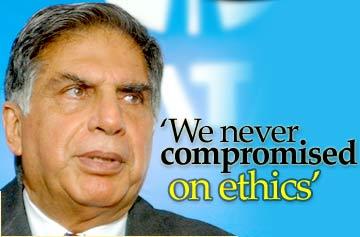

I'm displaying this article not with a little sense of pride, and I admit I am biased. There is something about the Tata group that gives me the goosebumps and makes me totally proud to be an Indian. I spent two years at Jamshedpur (affectionately called Jampot) and have an uncle who works in Tata Steel, so I have seen the truth closely and personally. Can the Tatas teach something to global business about the true nature of capitalist enterprise?
Or is it the exception that proves the rule ?
News week article - A New Kind of Company
(forwarded mail by Kingshuk)
Tata coddles workers, not managers, keeps its distance from Wall Street—yet thrives in brutal global industries as a uniquely Indian kind of multinational.
To see how they view industries and financial returns in the long term read this interview.
Jul 7, 2005
In the company of giants...


To be mentioned in the same context as Shobhaa De and Tarun Sheth is a humbling experience !
Abhijit Bhaduri's book on the life of Mediocre But Arrogant has my comment on the jacket along the likes of Shobha De and Tarun Sheth ! Of course there's Prof. Madhukar Shukla's comment too !
Of course my comment and hope is that Abhijit's book is the Indian answer to Peter Robinson's cult book on MBAs “Snapshots from Hell”
Now I'm waiting for my copy of the first novel....and Abhijit promises it's the first of a trilogy planned !
Jul 5, 2005
Blogging survey
Backbone Media has done a survey on corporate blogging. One can download the white paper here [pdf document].
My contention is that blogging is great for individual professionals and professional services firms to build their brands and expertise. For others it's a good way to test out new ideas. The vast majority of others will find the blogosphere a great means of evesdropping into conversations. But even those need dedicate resources, and in these cash strapped times, it remains a moot point as to where they will find those resources.
EXECUTIVE SUMMARY
With all of the buzz around corporate blogging, we wanted tounderstand the real value of it for companies. Why would a companywant to start blogging, who should blog, what makes a blog successful,and how can a company use this type of website to make a positiveimpact on business?
My contention is that blogging is great for individual professionals and professional services firms to build their brands and expertise. For others it's a good way to test out new ideas. The vast majority of others will find the blogosphere a great means of evesdropping into conversations. But even those need dedicate resources, and in these cash strapped times, it remains a moot point as to where they will find those resources.
Choosing a HR consultant
Dub Dubs has a great post from the HR.com site on how to choose a HR consultant. I personally found point number 7 very reassuring to read.
Sanjay would approve !
And that point applies to almost every kind of 'partnering' relationship, not just a HR consultant. If you find that people around you are not asking "why" , maybe you are doing something wrong !
Maybe clients need some education too on how to get the most value out of a consulting relationship. Too many times people are used to working with "vendors" and not "partners" !
They will “push back,” and not merely respond to your requests. Good consultants ask “Why?” when you tell them you want something, and attempt to determine what you really need, which may be different from what you think you want. That’s why you’re assessing outside help.
Sanjay would approve !
And that point applies to almost every kind of 'partnering' relationship, not just a HR consultant. If you find that people around you are not asking "why" , maybe you are doing something wrong !
Maybe clients need some education too on how to get the most value out of a consulting relationship. Too many times people are used to working with "vendors" and not "partners" !
Venture capitalists in rush to seize opportunities in India
Carlos Velez tells us that the San Jose Business Journal profiles the rush of local VCs into India.
Wow ! That's encouraging !
"Smart people in India are realizing that their jobs can be commoditized very soon to lower-cost companies eventually and that's why they're looking at product companies," Mr. Stjernfeldt says.
Wow ! That's encouraging !
Job portals and the coming shake out
There was this news item at the google news portal that made me (even jaded ol' me) sit up. Apparently Naukri.com is planning to enter other portal businesses like real estate, education and e-commerce. After Jeevansaathi.com (the matrimonial portal) is this the new lines of business that Naukri is targetting? Makes sense, because thankfully people don't go through the matrimonial process as frequently as they change jobs (at least not yet !!!).
But a search on google for Real estate India brings up indiaproperties.com and abodesindia.com . Naukri.com's success was in being the first job portal to come up in India and building Monster-like functionality before Monsterindia.com became a reality. With the result that Monster had to resort to the acquisition of Jobsahead.com to compete with Naukri.com
I tend to think (as do others on the blogosphere, specially Online Recruitment expert Joel Cheesman) that the existing model of job search portals is due for a big overhaul, with vertical search becoming more and more pronounced, social networking meeting job search (think Linkedin.com partnership with simplyhired.com or the cool Jobster.com), and 800 pound gorillas like google and yahoo getting into the game with personalized search is skewing the field as Joel says.
And in this scenario I got a mail from someone called Himanshu asking me to review a site called Bixee. And I was pleasantly surprized to find a vertical job search engine like indeed but focussed on India. It needs some work, like an advanced search function (e.g. to distinguish between Jammu the city and Jammu & Kashmir the state!), but it's quite good to start with and gives Indian job hunters better reach, focussing on aggregating from 16 India focussed jobs sites. The only doubt in my mind is their ability to make revenue. I only wish they persist and get ready for the Google.co.in onslaught when (and not if) it comes.
But a search on google for Real estate India brings up indiaproperties.com and abodesindia.com . Naukri.com's success was in being the first job portal to come up in India and building Monster-like functionality before Monsterindia.com became a reality. With the result that Monster had to resort to the acquisition of Jobsahead.com to compete with Naukri.com
I tend to think (as do others on the blogosphere, specially Online Recruitment expert Joel Cheesman) that the existing model of job search portals is due for a big overhaul, with vertical search becoming more and more pronounced, social networking meeting job search (think Linkedin.com partnership with simplyhired.com or the cool Jobster.com), and 800 pound gorillas like google and yahoo getting into the game with personalized search is skewing the field as Joel says.
And in this scenario I got a mail from someone called Himanshu asking me to review a site called Bixee. And I was pleasantly surprized to find a vertical job search engine like indeed but focussed on India. It needs some work, like an advanced search function (e.g. to distinguish between Jammu the city and Jammu & Kashmir the state!), but it's quite good to start with and gives Indian job hunters better reach, focussing on aggregating from 16 India focussed jobs sites. The only doubt in my mind is their ability to make revenue. I only wish they persist and get ready for the Google.co.in onslaught when (and not if) it comes.
Jul 1, 2005
Lots of jobs, but where are the skills?
In this earlier post I had reviewed a growth in India's employment figures. That seems to be true but a Businessworld article says that maybe all the jobs may not be so easy to fill.
Does that sound scary? It sure does. Especially as the shortage is in critical areas like middle management and high end skills that add to the bottomline as well as the top-line.
So that should comfort those folks who fear that the growth of the Indian economy might be skewed towards the "call centre types" (Yes, Charu I am talking about you :-)
The encouraging thing about the boom is that it is also being driven by smaller firms that are professionalising management in smaller towns. This is forcing high volume recruiters like Adecco People One and Ma Foi are opening their shops in smaller towns like Hubli, Mysore, Bhopal, Tirupati, Allahabad and Nashik to Dehra Dun, Vijayawada and Ludhiana. In fact the industries most being hit with the skills shortage are Engineering firms and Financial Services.
Now that's scary ! I think it's high time Industry associations like CII got out of the lucrative conference business and got down to addressing these nitty gritty issues that will KO business in the long term. I hope organizations like The National Innovation Foundation will address such issues too !
From mining engineers to patent agents at the more complex end of the job spectrum to sales people at retail establishments at the less demanding end, India is throwing up a tough challenge to employers: the dearth of right skills in a workforce that is reputedly the most highly qualified in the developing world.
Does that sound scary? It sure does. Especially as the shortage is in critical areas like middle management and high end skills that add to the bottomline as well as the top-line.
Recruitment firms say that healthcare, telecom, automobile industries and auto
ancillaries lead the pack followed by pharma, hotels, oil & petrochemicals, power (yes, power), education, training & consulting (ET&C) and textiles. It would appear that almost every sector that the recruitment agencies are surveying is showing a sizeable increase in the intake of staff. Overall, it's a bullish scene after several years of jobless growth. Hiring agencies are trying to fill the mandates for senior people in the life sciences, pharma research, biotech, FMCG, and travel and tourism. In short, just about everything.
So that should comfort those folks who fear that the growth of the Indian economy might be skewed towards the "call centre types" (Yes, Charu I am talking about you :-)
The encouraging thing about the boom is that it is also being driven by smaller firms that are professionalising management in smaller towns. This is forcing high volume recruiters like Adecco People One and Ma Foi are opening their shops in smaller towns like Hubli, Mysore, Bhopal, Tirupati, Allahabad and Nashik to Dehra Dun, Vijayawada and Ludhiana. In fact the industries most being hit with the skills shortage are Engineering firms and Financial Services.
Pandia Rajan says Ma Foi's experience is that that at any given time 80,000 vacancies remain unfulfilled because of the demand-supply gap. For instance, in ITES, the company finds itself unable to fill two-thirds of the demand; for every person it hires, it wades through an average 41 applications and rejects about half of them in the first instance itself.
The number of PhDs as well as their quality will have to go up substantially if the Indian technology industry is to become globally competitive. This shortage has affected the ability of the Indian IT industry to innovate, although a services industry may be able to make do with M.Techs and graduate engineers.
Now that's scary ! I think it's high time Industry associations like CII got out of the lucrative conference business and got down to addressing these nitty gritty issues that will KO business in the long term. I hope organizations like The National Innovation Foundation will address such issues too !
I took the survey
MIT is conducting a weblog survey. They need more and more people to make it truly representative. Click on the image below to access it:

Interesting discussion on "Value addition by HR"
Sanjay's post on his blog has triggered off some good discussion on the future and value of Human Resources.
Join in !
Join in !
Subscribe to:
Comments (Atom)