Jun 30, 2005

Deja vu, Mr.Premji?


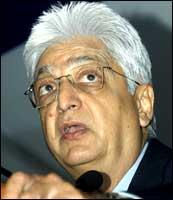
Sometimes history repeats itself, but a little differently. Wipro has lost its Vice Chairman Vivek Paul, the highest paid Indian professional manager (at $ 1 million) in quick succession to the exit of Raman Roy, who used to head Wipro BPO.

The question that needs to be asked is, why do the best managers leave Mr. Premji's organization?

Jun 29, 2005

Added on the blogroll of

...the good folks at Jobster Blog. Thanks Jason and friends !

Some good discussion on "passive" and "active" candidates at the site. One common view is that "passive" jobseekers are somehow better. Here's what I think.

And Jason has invited Indian staffing teams to trial Jobster for their recruitment needs.

Jun 28, 2005

Some good articles from HBS working Knowledge

Some good articles I came across..check them out and let us (the other readers and me :-) know what you think...

Asian and American Leadership Styles: How Are They Unique? - What are the differences and what are the similarites? I personally think the word "Asian" is quite limiting ...Asia is too big and diverse to be compared , and cultural factors have a quite of bit impact on organizational and leadership cultures.

People Power: How to Measure It - Two BCG consultants say that , the problem is not lack of information but the failure to use it. Information generated and reported by a company remains just that—reported- and only a handful are actually used by line managers in making operations-management decisions.

Jun 24, 2005

Even MBA jobs are not secure

So says an incredulous Carlos Velez in his blog:

Morgan Stanley has moved about fifty of its analysts to India as well. Analysts are MBAs who do research and analysis of corporate financial statements, business plans, and execution in order to make investment recommendations on various stocks and bonds....guys who do it earn $80,000 a year and up in New York...Their American managers told me they (Morgan Stanley India) also work harder and make fewer errors while earning only $20,000 a year.

That doesn't sound quite right....comes to around 9 lakh rupees (Rs. 900,000) for folks not from India. So MorganStanley is saying it pays them $20,000 a year or is that the mysterious TLA (Three Letter Acronym) called CtC (cost to company)? Please note that MBA is also a TLA :-). Fewer errors? Hmm, and they work through the night? Imagine what would happen if they worked sane hours...6 sigma productivity like the Mumbai dabbawalas. Maybe we should name Mumbai the 6sigma city instead of the Maximum city.

Jun 23, 2005

Jobster feed on my blog

I am piloting a Jobster "Jobs in my network" feed in the left hand navigation bar. Do let me know how you find it. You'll have to scroll down to the absolute end of the left navigation bar to find it. It says "Recent jobs in my network" and ends with "powered by Jobster"...found it?

Thanks Jason!

You know you live in a globalized world...

...when the kind of things you do in India can affect your business in a US university !

Coca-Cola placed on Probation by Univ of Michigan

In a stern notice to the Coca-Cola company, the company must agree in writing by September 30, 2005 to a third party, independent investigation into the pesticide issues in India and labor issues in Colombia, with the audit to be completed by March 31, 2006. Coca-Cola is then "expected to put a corrective action plan in place by May 31, 2006."
The DRB further states that in the event that deadlines are not met and satisfactory progress is not made, "the University business relationship with Coca-Cola shall be suspended and Coca-Cola products shall not be offered at the University, which includes but is not limited to vending, food service operations, athletic events and University-catered events."
The Coca-Cola company has been selling products in India with high levels of pesticides, including DDT, sometimes as high as 30 times those allowed by the US and EU standards. On May 19, 2005, a shipment of Coca-Cola products made in India and shipped to the US were barred from entering the US by the US Food and Drug Administration, on the grounds that they were "unsafe" and "not conforming to US laws."

Jun 22, 2005

Leaders from the developing world

Normally Indian organization have viewed MNCs as threats they needed to be be protected from (trade barriers, tariff barriers) or to be joined forces with (like mergers, buyouts, JVs). A recent McKinsey article however contends that the next phase of global leaders would emerge from the developing world.

emerging markets, far from being a handicap, actually provide an invaluable springboard. The combination of demanding yet price-sensitive customers and challenging distribution environments can help determined companies develop the distinctive capabilities they need to compete successfully elsewhere.

Ranbaxy became one of the world's most cost-effective drug manufacturers before moving beyond its national borders. The Spanish institution Banco Bilbao Vizcaya Argentaria (BBVA) learned to use its resources more effectively than most of the world's banks and only then pushed into Latin America. Before going abroad, the Indian company Asian Paints had already reduced its working-capital turns to levels below those of all but one of the world's leading paint companies, and India's ICICI Bank made more money on small transactions than did the world's best institutions.

Note that no mention of the so-called leaders of Indian IT like TCS, Infosys, Wipro, Satyam. And that is because they have mostly used cost arbitrage to succeed. Note that when competing against global leaders on their home soil these giants have not succeeded so much. Sanjay Anandaram of JumpStartUp, a VC firm wrote in a businessworld article on the Indian IT industry:

It is disheartening from an industry standpoint to see hundreds of millions of dollars simply lying on the balance sheet and not being invested in creating innovative competitive advantages for the future. It is disheartening to see companies lack the confidence to take big, bold steps, even after 20 successful years in the global arena. The ability to dream big on a global level and then take the required steps to realise the dreams is what will distinguish the true global players from the also-rans in the next 10 years.
Mindsets need to change dramatically, especially among leadership levels. From managing status quos to managing risks, from managing people to managing businesses and leveraging opportunities, from managing Indians to managing a diverse global workforce, from a 'span of control' to a 'span of competencies' - all these initiatives are essential for success. Career paths for R&D and industry experts, for example, need to be made as attractive as jobs that are oriented to people management. An entrepreneurial environment and mindset has to be put in place.

More on HR being strategic

Continuing on the HR as strategic partner thought, here's what Sanjay has to say:

My simple thought for the HR folks on this matter is :
- stop thinking of yourselves as the policemen in the organization who uphold the law (rather policies)
- start questioning the quality of the services that you deliver
- stop penalizing everybody by creating cumbersome processes to stop misuse by a few
- start listening to the customer, HONESTLY, they will help you improve
- stop thinking that HR folks are the only people who care for the company, rest everybody is trying to rob the organization
- start creating a positive image of your department in the organization

Jun 21, 2005

The future of HR : by Ulrich and Brockbank


This week seems to be focussed on HR's role in business. I just came across another grreat article from the HBS WK series. According to David Ulrich and Wayne Brockbank in the HBS working Knowledge series is:

But this story also suggests what is next for HR: beginning to connect with those outside the firm as well as those inside.

Ulrich and Brockbank suggest that the way forward is for HR people to understand the concept of value.

While HR professionals must declare, live, and encourage moral principles, we believe that an HR value proposition goes beyond values. Value also means that someone receives something of worth from a transaction.

  1. Starting HR transformation with a value proposition has six important implications for HR professionals.
    First, human resources work does not begin with HR—it begins with the business.
  2. Second, the ultimate receivers of business reside in marketplaces that companies serve.
  3. A third implication of the HR value premise is found in framing HR as a source of competitive advantage.
  4. A fourth implication of the HR value proposition is that HR professionals must align practices with the requirements of internal and external stakeholders.
  5. The fifth implication of the HR value premise is that it directs HR professionals to acquire the personal knowledge and skills necessary to link HR activity to stakeholder value.
  6. The sixth implication of the HR value premise is that it leads HR professionals to view a company's key stakeholders from a unique and powerful perspective. And the HR perspective must be both. Unique implies that other functions or members of the leadership team do not share this same perspective and do not realize they need it. Powerful implies that this perspective adds a substantial value in helping the organization succeed.

Thus when HR professionals view the market environment, they should address the following questions:

  • What are the organizational capabilities that my company must have to create products and services that result in our customers' taking money out of their wallets and putting it into ours instead of giving it to our competitors?
  • What employee abilities do our people need so that they can understand and respond to short-term and long-term market demands?
  • How do we invest in HR practices that deliver business results?
  • How do we organize HR activities to deliver maximum value?
  • How do we create an HR strategy that sets an agenda for how HR will help our company succeed?
  • How do we ensure that HR professionals will know what to do and have the skills to do it?
When HR professionals respond to these questions, they will know why others would benefit by listening to them, because they will be delivering real value—and they will know what that value is. When HR professionals begin with the receiver in mind, they can more quickly emerge as full strategic contributors; add greater value for key stakeholders (customers, investors, line managers, and employees); enhance business productivity; achieve measurable and valuable results; create sustainable competitive advantage; and have more fun in their careers.

I couldn't agree more. And when Indian organizations' HR groups actually analyze these thoughts they will find a huge gap. What is needed is a great effort to either become strategic or become more and more irrelevant and to lose ground to external service providers.

Jun 20, 2005

Dave Pollard suggests organizations not to blog

While addressing the question What Should Your Corporate Policy Be On Blogs?, Dave Pollard makes the point in strict opposition to what most other blogging gurus are advocating.

With rare exceptions, don't have an 'official' company blog: Most people are skeptical of anything they read on official company sites, and that will usually negate any value they might have in making your company appear more personable and responsive to customers. Blogs are personal and casual. Most business communications are not. Be cautious and talk to your marketing people before proceeding. Don't forget, blogs are a significant time commitment to maintain, and a blog that is not frequently updated or not well maintained is worse than not having one at all. If you do decide to have a company blog, make sure you know who its intended audience is and that this intended audience is the group who will actually be reading your blog. Blogs (like other corporate websites) are more likely to attract potential recruits, alumni, competitors, potential allies and the media than customers. If your actual and intended audiences are very different, you're wasting your time -- and your readers'.

Some career advice

Stay Hungry. Stay Foolish. 'You've got to find what you love,' Jobs says.

I guess hungry to ensure that you are never satisfied with the status quo and always to learn, unlearn and re-learn basic truths in your career.

And foolish, again I guess, to make career and life choices that go against the grain of conventional wisdom and in doing so discovering your own path in life and not just be a rat in the race.

Or you can go ahead and choose to be a fat rat ! It's your life and your choice.

HR and other thoughts

Regina at BNET points to a McKinsey report on The Dearth of HR Talent in Europe.
The hilarious bit was this quote:

"These findings echo our experience throughout Continental Europe and should worry boards and senior executives, who spend increasing amounts of time on people-management issues. Sixty percent of the HR directors we interviewed, for example, said that the senior-management teams of their companies devote more than one day a week to such issues (exhibit). One leader commented, "Everything we do today is a people-management issue."

Yeah. Right. Like it's the legal group's responsibility to ensure that all managers do lawful things ! When will people understand that HR is not a group like Marketing, Sales or Production. HR is a facilitative group and the translation of HR processes into reality is in the hands of the line functions !

Regina also points to Liz Ryan's article at Business Week Why HR Gets No Respect? I agree that the vicious cycle HR finds itself in is because of CEOs who don't know how to get value from their HR people, and HR people who can't tell them how they can help them get value from them.

That's why I believe that the best HR organizations would be ones with CEOs who know how to leverage HR to sync with their business strategy.

The Ambani saga comes to an end...


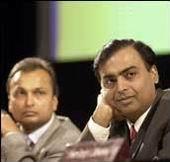
I mean it comes to the end of part one and now we have two sequels ....RIL and ADA ...

You know you are dealing with an alpha male when he promptly leaves Reliance and floats a company called Anil Dhirubhai Ambani Enterprises. ADA Enterprises? This guy really has the second brother syndrome to really prove himself ! Will Mukesh change RIL's name now? Not likely...

Even then, ADA would continue to use the Reliance logo.

And some management advice:

Meanwhile,Morari Bapu, the spiritual guru of the Ambani family, today said he had advised Reliance Group founder late Dhirubhai Ambani’s wife Mrs Kokilaben to resolve the differences between her sons Anil and Mukesh in such a manner that would be beneficial to all.“Prem se saath rehna achha hai aur prem se alag rehna bhi achhha hai parantu vidwesh se saath rahna bura hai aur alag rahna bhi bura hai’.

How's that for conflict management principles :-)

Jun 17, 2005

India Employment Outlook survey

Manpower unveiled the survey which indicated positive trends for the July-September quarter.

Of the Indian employers interviewed, 41% said they expect to hire more people during the third quarter of 2005, 7% of the employers expect to reduce their workforce, while 44% anticipate no change.

Mr. Jeffrey A. Joerres, Chairman and CEO of Manpower Inc said, “Employers in India are the most optimistic about adding to their payrolls in the upcoming quarter. These strong hiring intentions are largely fueled by the vigorous hiring occurring in the Services sector.”

“The hiring pace across Asia Pacific is expected to slow down somewhat from last quarter, most notably in the Finance/Insurance/Real Estate and Wholesale & Retail Trade sectors. Japanese and Chinese employers are telling us they’ll be adding staff at a considerably slower pace in the coming months, which is typical of their normal annual hiring patterns,” added Mr. Joerres.

Employers in Australia and Japan indicated that they will add more staff compared to third quarter of 2004. Labour market activity is expected to be weakest in Singapore, in the Asia Pacific region.

Jun 13, 2005

Am shifting cities- new contact numbers

from Bangalore to Hyderabad...currently in the midst of baggage and packing, and house-hunting...

so postings will be light.

I can be reached at my new numbers in Hyderabad at +91-98665-11236

Have a great week....and wish me luck!

Jun 9, 2005

Why do organizations want "previous work experience"?

This post is triggered by Heather's post here.

I also think there's a comfort level taking risks on new grads because they are less opinionated about what *works* in the business world (oh come on, I know I have an opinion on "how things work"...otherwise this blog would be b-o-r-i-n-g). But on the flip side, career changers bring so much maturity and different perspective to the table. Are hiring authorities worried that their next desired role is just an experiment? That they are trying something new because they failed at what they did before? Or do we embrace the risk taker?


My response (not that I necessarily that I agree with it) tries to reason out why an organization might not look at somebody with "non-relevant" work experience for an experienced level opening.

It is easier to get a transition with your current employer than to ask for a change with a new employer.
Look at it this way, every hiring decision is a risk that the organization takes, and asking for previous experience is a way to mitigate that risk...that is because there are lots of factors that can be behind a successful talented person...like great organizational processes, a great team, top management support...you don't know if in your organization he/she will be as successful...but you still take a chance as the person has done this thing before...
On the other hand hiring someone new without any previous experience in that kind of role actually means taking the most risk...sure it might pay off handsomely , but typically management is about reducing risks in most organizations.

Jun 8, 2005

RSS feeds for your yahoo!

Hi, if you don't use an aggregator, you can still subscribe to the RSS feeds of this blog by clicking on

Add to My Yahoo!

on the left hand navigation bar. You would then be able to see new blog posts headings through your "My Yahoo" page if you have a yahoo account.

OD and KM

I've been thinking over the last few days...that traditional approaches to KM have followed the two approaches that are doomed for failure. These are the

1. Expertise approach - The assumption being that people in the 'client' organization do not know anything and it's the expert's job to make them aware. The expert mostly does not do any implementation of his/her recommendations.

2. The pair of hands approach. The 'client' is aware of what needs to be done, but lacks the time or money or both to develop the necessary skills. This is the approach most often taken by IT consulting organizations, and this is the reason that while KM systems often come up they are rarely successful. That's because the 'client' is usually the top management and not the user of the system.

The OD consulting approach is a little about expertise and a little about skills, but these are focussed on the "how"s of a client. e.g. an OD approach to KM would involve delving into questions like:

1. Why do the people not share knowledge and vice versa?
2. What are the other organizational processes that have an effect on knowledge sharing like compensation plans, performance plans, succession plans?
3. How do the unsaid rules of the organization impact knowledge sharing.

Eventually every KM project is an attempt to change the corporate culture of the organization and the behavior of people in the organizational systems. This change can never be sustainable unless human and organizational processes change to support this change. That is the insight that traditional OD consulting brings to KM.

Maybe it's time more OD consultants started doing KM consulting, and more organizations looking at KM consulting started hiring a OD consultant.

Go here to know more about OD.

I've caught it...!

The book tag that's spreading like a virus across the blogosphere...it was passed on to me by the Canadian Headhunter, again showing how dangerous these viruses are, physical proximity be damned ;-)) !

As the CH explains: It's all part of a mean (or is it meme? -GG) game that's going round the blogosphere. They send you a list of questions and you have to confess and contaminate five others to get out. (Or God punishes you).

Here goes:

Number of books I own: around 150....counting my children's story books, they would number 250!

Last book I bought: The Hungry Tide by Amitav Ghosh (no relative of mine!). It's a great book about human longing and love in the midst of swampy mangrove forests of the Sunderbans.

Last book I read: The Pfieffer 2005 annual on Consulting. It was such a disappointment ! Only one article on the dangers of people jumping on the coaching bandwagon was of any significance.

Five books that mean a lot to me:

Flawless Consulting by Peter Block. Tells you how to actually apply your functional skills in an internal consulting role. Must read for all "staff" functions. My full review is up at Amazon.com.

Enabling Knowledge Creation: Nonaka's second book in English. I found it more useful than the first one. Shaped a lot of my thoughts on Knowledge and the futility of managing it.

Midnight's Children: Salman Rushdie's masterpiece. The best book I've ever read!

The Living Company: One of the clearest articulations of the shift in organizational theory, written by a practitioner, Arie de Geus.

The Foundation series by Issac Asimov. I'm a sci-fi fan, so choosing this over Rowling's or Tolkein's series was a close but easy decision :-)

The people tagged below have to answer the same questions I did, on his/her own blog and tag five more players.

Here goes, I'm tagging.....

Nimmy
Rashmi
Heather
Madhukar
and, Sanjay

Jun 7, 2005

Am @ Indianblogs.net !

This virtual world is so confounding I tell you!

People can invite you without you getting to know about it !

I didn't even know that I was at Indianblogs.net posting in the august company of folks like Amit Varma . Indiablogs.net is beta version of a full fledged web blog aggregator for Indian blogs. Nice idea! My congratulations to the editor, whoever he/she/they are.

Indian innovation on the decline?

from The Financial Express:

the proportion of national resources spent on R&D by India has declined steadily, from a peak of 0.98% in 1988 to 0.66% in 1997, before recovering slightly to 0.8% in 2000. This decline is a matter of grave concern. It threatens to widen the already serious technology gap between India and the world economy. Industry spends only 23% of national R&D expenditure and the bulk comes from public-funded institutions. Hence, the decline may largely be due to the budgetary squeeze. However, even the rate of growth of R&D expenditure in industry has declined in the 1990s.

why blog?

Carlos has a cool post called "why blog?"

And I've left a comment which can be summarised as follows:

1. Blogs help in personal KM
2. Blogs help communities discover themselves (remember the long tail theory?)

David Weinberger puts it in a better way:

Blogs = K
Tags = M

Put them together and you get KM...

Apart from these reasons, blogs help you in branding "You, Inc."

,

Rumors in the HR market

Dub Dubs has the inside dope...I wonder what that means to these HR consultancies' manpower in India...?

But yes, the outsourcing practice now accounts for a sizeable chunk of the consulting market. Don't believe it? Check this piece of information at the Management Consultants Blog. 38% is a big number by any stretch of thinking. Another interesting thing to note is that HR consulting accounts for 10% of the consulting market. And if the rumors above are true, how much of that 10% will flow into the 38% bucket of outsourcing.

Simply speaking, if a consulting firm gives a client a HR outsourcing strategy and implements it, would it be billed as HR consulting revenue or Outsourcing revenue ?

Sanjay Lakhotia has an interesting experience to share when a client wanted to outsource.

This got me thinking about the motive most clients have around outsourcing and why it ends up not giving the requisite benefit that it should. During conversations with a few clients the feel I got is that clients wanted to download their problems onto someone else, who can be blamed, other than of course show cost reduction. Due to this the situation never improved for most organization, infact it worsened as now there was another inefficient process of handover between the organization and the service provider.

Jun 6, 2005

A friend starts blogging

A very senior alumni of XLRI, Hari is the owner of Fortuna Consultants, a Headhunting firm focussed on HR Jobs in India. He's started blogging here.

Blog Fests

This week's Carnival of the Capitalists is up at GalaTime, where time is money! While Saket hosts the Bharateeya Blog Mela.

Jun 4, 2005

Dub Dubs is surprised...

by the quality of HR blogging content originating from India....

and then he comes to the conclusion...
this reveals the truth behind how much brainpower is over there. Well... they do have 4x more bodies than the U.S. after all.

I never realised the power of blogging to shape opinions of functional competence or national image. Of course, the power of communicating in a common language makes it easier for Indian bloggers to be understood by English, American, Australian, Kiwi and Canadian blog readers. Yes Canadian Headhunter you won't come across issues like this on most Indian blogs :-)

On the serious side, I took some time to analyze the data of nationalities of people accessing this blog and this is what it showed.

After India, Singapore came in second with 9% people accessing, followed by US at 8.39% and Australia at number four with 6% of the count. Canada comes in fifth (Anthony and Michael, why are you lagging behind ;-) ?). The next 5 countries are those that are not native speakers of English like Netherlands, France, Germany, Japan and Indonesia. So if you folks find my writing style/language difficult to follow , please drop me a comment and I'll act on it !

The interesting point to note is that India only accounted for 42% of my hits. Hmm....now I know what kind of dilemmas a Trans National Corporation might be feeling.

Ok, with that extremely pretentious comment , I think it is time I headed towards dinner !!

The entry level salaries for B Schools students

Prof. Madhukar Shukla has a brilliant post on salaries given by organizations during the B-School placement season. He trains his guns on students who are only fixated on salaries, on the non-transparent B-Schools and even the business magazines who rank B-Schools. An excerpt:

But ultimately, the choice is determined by the salary package, since, under the peer-pressure during the "Placement Season", the salary also becomes a - one may say, the only - measure of one's self-worth.
The myth of CTC-masquarading-as-high-salary, however, does not end here. It gets further perpetuated by the B-Schools themselves, when they quote salaries for the subsequent B-Schools Ranking Surveys done by different magazines and newspapers.
Lastly, we have the magazines and newspapers, who play a crucial role in sustaining, and feeding, the illusions.
Why do these publications neglect other data - e.g., lowest salary - in their survey?
One simple reason is that they are entirely dependent on the B-Schools themselves for any information - and no B-school will share this kind of information (or, at least, will share it accurately). Secondly, to do an accurate survey of hundreds of B-schools requires resources - reporters who can travel to the business schools, talk to recruiter, alumni etc. - which will make the cost of the "story" prohibitive. In fact, often the survey is outsourced to some other agency.
...and who loses in the process?
...the naive prosective B-school aspirant - the kind, who wrote me that mail yesterday...
...till s/he joins the system, and becomes a party to creating/ perpetuating the Maya of B-School Salary....

Jun 3, 2005

Some news...

I had hinted in this post, so here goes. The news is formal now.

I am moving out of my specialist function of Training, Learning & OD.

I am also moving cities.

So where am I headed.

Still with the same employer, but in a new role as a HR generalist in Hyderabad.

Kinda feels like stepping off a cliff, you don't know whether the ground you land on will be rocky or welcoming.

In the spirit of learning new skills (MS Excel not being the least of them!) I am enjoying the feeling. Sometimes when faced with a new situation, we can choose to react to it in two ways. The awe-struck wonder of the child and respond to it with enthusiasm. Or, we could react to it with the fear of deer-in-the-headlights and react to flee from it.

Of course, the fact that I drove this change myself is helping me react a lot positively. And the hope is that it will help develop my counseling and consulting skills further. In the long run, helping me become a better coach. As this website said:

If you find that you get bored doing the same thing twice, then the generalist role might be more suited to you. As a generalist, you are required to wear many different hats. One minute you may find yourself negotiating the employee benefit package for your company and the next you could be conducting a training program for your line managers. Generalists tend to get their hands into everything.

(yep, that sounds like me :-)) And this doesn't hurt either:

Generalists tend to be a bit more isolated from the effects of a downturn. In a downturn, generalists often pick up more of the responsibilities of downsized specialists. It is easier to teach a generalist the daily workings of a few HR specialties than it is to teach a specialist all of the other facets of HR.

Oh by the way, check this blog on Business Coaching and Consulting.

What do you look for in a career?

"Aapki naukri mein na izzat hai, na mazaa hai aur na matlab (Your job has neither respect nor fun nor meaning)," - Bunty in the film Bunty aur Babli

So when did Bollywood filmmakers like Yash Chopra become career experts. Rashmi Bansal thinks that the quote from the movie above captures the essence of what people look for in a job and career.

Respect (the kind of job should evoke external and internal respect) is an intrinsic part of the job. Lots of careers come with external respect, while others do not. Rashmi covers external respect, but I would add a respect one has for one's job goes a long way to "make meaning" for oneself.

So as an employer, if you think people do not respect the job your employees do, what are you going to do about it? And what are you going to do that will make sense, which is a precursor to your employees evoking respect for the job.

Fun. Fun can be superficial or inbuilt. Fun can be linked to the task or the environment. What are you doing as a manager/employer to add to the daily zing that makes employees want to come to work? Are you building a community of employees by giving them time and space to "chill out" and "hang out" with each other? Do you organize events that make people loosen up and laugh?

Meaning. This is the least you can do as a manager/employer. Meaning is very individual to a person. It is tied up with one's inner desires and motivation. It might be pointed to by educational qualifications, but maybe not. It is the part that people compromise most when starting their careers and ends up after a couple of decades as the reason for the mid-life crisis. At the most what you can do is assess the needs of a person and hope he/she is in a job that makes most meaning to him/her.

Jun 2, 2005

Siamese twins - jobwise?

For six years, we shared a job at Fleet Bank: vice president, global markets
foreign exchange. One desk, one chair, one computer, one telephone, and one
voice-mail account. We had—still have—one résumé.
- HBS Working Knowledge
Cynthia R. Cunningham and Shelley S. Murray shared an executive position for six years in the Foreign Exchange Group at Fleet Bank (formerly BankBoston). They are currently taking a hiatus from professional banking to share their story through writing and speaking opportunities. They plan on pursuing a joint career.

When I read that I almost dropped my coffee on my keyboard (thank goodness there was no coffee left!). The first thought, sometimes executive egos are bigger than the job description, so how can two executives do one job?

What the article describes are how two executives went ahead and refused to let their work life balance suffer. The take away?

You have to have to be able to challenge 'assumed' notions about jobs
Understanding your job-twin is critical
Bringing complementary skills (and I suspect, viewpoints and thought processes) would be easier for an hiring manager to make this decision.
No data given on the nature of the salary, but I am sure they split one salary between them, rather than the organization giving them two salaries which was effectively one job.

This made me think. Would I ever be a job-twin with somebody? There are some people I have worked beautifully on projects...but would I work with them on my job...? I am not sure.

What about you?

Social networking knowledge

I've been a member of Linkedin from a long time, but only recently I have found out that there is a huge community of people who have taken the time and effort to share best practices about how to use linkedin to further extend their network and business success.

These are:

Go ahead, check them out. In case you are wondering why should anyone connect to anyone out of one's strong connections, here is a good article to read, The Strength of Weak Ties (and in a pdf format) by Granovetter.