I've been trying to persuade Ingrid (CEO of CRY) to start blogging to reach out to people who might not be being reached by CRY's traditional communication systems.
Today she sent me a mail informing that CRY has started a blog.
Yay, three cheers to CRY and Ingrid!
Apr 30, 2006

XLRI faculty fees to go up
We had an XLRI alumni meet at Hyderabad, as the current Director of XL, Fr. Casimir Raj was in town for a CII HR Summit.
The interesting thing we discovered was that even academic institutions are becoming subject to the war for talent. So XL is doing what most organizations do. Hiking salary. The salaries of the faculty will be going up by 15 to 25%. That's both basic pay as well as differential pay. In addition, it is trying to create a pipeline for future faculty by launching the Executive Fellow program. As opposed to a PhD or normal Fellow program, the Executive FPM would require working professionals to spend some weeks at the campus over three years.
I hope that brings in lot of new blood and industry perspective to management academia. Fr. Raj shared that the first EFPM program had resulted in 30 executives being selected.
What was also interesting to note was that XLRI is tying up with industry biggies to come with solutions for upgrading their HR competence. For example there is the Accenture, XLRI tie-up, as well as along with SBI and Mahindra & Mahindra.
The interesting thing we discovered was that even academic institutions are becoming subject to the war for talent. So XL is doing what most organizations do. Hiking salary. The salaries of the faculty will be going up by 15 to 25%. That's both basic pay as well as differential pay. In addition, it is trying to create a pipeline for future faculty by launching the Executive Fellow program. As opposed to a PhD or normal Fellow program, the Executive FPM would require working professionals to spend some weeks at the campus over three years.
I hope that brings in lot of new blood and industry perspective to management academia. Fr. Raj shared that the first EFPM program had resulted in 30 executives being selected.
What was also interesting to note was that XLRI is tying up with industry biggies to come with solutions for upgrading their HR competence. For example there is the Accenture, XLRI tie-up, as well as along with SBI and Mahindra & Mahindra.
Apr 29, 2006
A blogger on my blogging talk
The fact that I absolutely love about blogging is that information moves so quickly. During my KM talk at Satyam I discovered that Harini is a blogger, and today she left a comment to let me know that she had the snaps (here and here) from that day up at her blog.
She even calls the session "a runaway hit".
I hope it was :-) but the real truth of that statement would be if it excites people to make internal blogging a hit within Satyam.
She even calls the session "a runaway hit".
I hope it was :-) but the real truth of that statement would be if it excites people to make internal blogging a hit within Satyam.
Dell's Batis Brent to help Apple set up tech support centre
Dell and Apple are the apparent opposite site of the innovation spectrum (biz model innovation vs product innovation) and financially (Dell's consistent financial record vs Apple's yo-yoing record), but Apple apparently agrees with Dell's approach to building a tech support centre in Bangalore too.
So much so, that news is that Batis Brent, who headed HR at Dell International Services for some time has now been hired by Apple and is helping them set up their technical support centre in Bangalore.
Now, that's something!
So much so, that news is that Batis Brent, who headed HR at Dell International Services for some time has now been hired by Apple and is helping them set up their technical support centre in Bangalore.
Now, that's something!
Apr 28, 2006
Basab Pradhan on labour flexibility
Basab Pradhan reflects on the strike by French students and thinks that labour law flexibility in India is also a long way off.
I agree.
The vote power of the person who loses through labour law reform will ensure that politicians never take the step unless there is better incentive for them.
Hmm...what could that incentive be?
I agree.
The vote power of the person who loses through labour law reform will ensure that politicians never take the step unless there is better incentive for them.
Hmm...what could that incentive be?
Resources for deciphering business jargon
Tom's new Biz Decoder and the Bullfighter.
Essential reading, so that when you get out of office, people can still understand you on the street and at home :-)
Essential reading, so that when you get out of office, people can still understand you on the street and at home :-)
Sometimes....
...away from the questions of jobs availability, skills relevance, competence development, competitive survival....
we must ponder over the deeper questions.
we must ponder over the deeper questions.
Xtreme recruiting
Bill Vick has a great blog that offers podcasts of recruiters.
So if you want to pick up some great tips on the "how-to" of recruiting. It has the kind of insights that 'text-blogs' might never pack in a post.
I am connected to Bill through linkedin but realised that I have never linked to his blog !
So if you want to pick up some great tips on the "how-to" of recruiting. It has the kind of insights that 'text-blogs' might never pack in a post.
I am connected to Bill through linkedin but realised that I have never linked to his blog !
Apr 26, 2006
The blogging presentation
Hi, I got a mail from a reader saying that he was unable to download the ppt. If you have a similar issue please send me an email and I'll mail it to you.
My talk on blogging
I delivered a talk at Satyam computers on 25th April. I was invited by the Knowledge Management team there to address their employees on the nuts and bolts of blogging and sharing how Blogging could be a tool for Knowledge Sharing within the corporation.
The presentation I made can be found here - It's a 2 MB PPT.
I was pleasantly surprised to see that the crowd (about 40 people had come in) covered people from all levels in the organization and functions (there were people from businesses, strategy group, learning center and support functions who were there). The best part was finding out that there were 4 bloggers there, although the famous tech blogger Sadagopan wasn't there.
There were quite a few questions about what could motivate people to blog within the organization and who should blog and what should the purpose of blogging be.
My take on the questions was that a variety of approaches could be tried for blogging and eventually the culture of the company would determine what kind of blogging takes off, and finds the rhythm within the organization.
Thoroughly enjoyed myself in the talk and found myself getting quite passionately drawn into the discussions around it.
The talk has given me also quite a bit of food for thought and I will be blogging about them in the near future.
The presentation I made can be found here - It's a 2 MB PPT.
I was pleasantly surprised to see that the crowd (about 40 people had come in) covered people from all levels in the organization and functions (there were people from businesses, strategy group, learning center and support functions who were there). The best part was finding out that there were 4 bloggers there, although the famous tech blogger Sadagopan wasn't there.
There were quite a few questions about what could motivate people to blog within the organization and who should blog and what should the purpose of blogging be.
My take on the questions was that a variety of approaches could be tried for blogging and eventually the culture of the company would determine what kind of blogging takes off, and finds the rhythm within the organization.
Thoroughly enjoyed myself in the talk and found myself getting quite passionately drawn into the discussions around it.
The talk has given me also quite a bit of food for thought and I will be blogging about them in the near future.
Mohandas Pai takes over as Infosys's HR head
A reader sent me an email asking why I hadn't blogged about the fact that Infosys' CFO had given up his finance role and was moving into the position of the head honcho of HR.
The reason is simple, I hadn't read about it in detail and therefore refrained from commenting on it.
Going through the news item I truly regret that this is one item that escaped my radar. (hey, I am human too ;-) !). That said and done, I don't think that it signals anything that says "anyone can move into HR"
Let us not forget that in traditional corporate parlance the CFO is next to the CEO in the pecking order. Why would someone like Mohandas Pai, who's not anybody's idea of the demure numbers only CFO give that up to head HR?
Pai was not just a finance man, he was also a strategist and a person with strong opinions who holds his own after Cheif Mentor Murthy and CEO Nandan Nilekani.
After Hema Ravichander had left, Infosys had filled her role with another person from the business, Bikram Maitra. I couldn't find any news on where Bikram is moving to, but I really think that Pai's taking over the HR role is an admission by Infosys that people are as important if not more, than the language of business - Money !
As this news item shows, it's a time of great churn for head of HR's in India.
While K Achutan joined Reliance Capital from GE Commercial Finance, Aquil Busrai moved from Shell Malaysia to head HR for IBM global services in India. Similarly, Narayan Nair has quit GE Global Exchange and joined as head of HR for Computer Associates.
Computer Science Corporation saw Neelam Mahajan of IBM join as head honcho of HR. Avdesh Krishna has moved from GE to Lehman Brothers. Others to move were Abhay Valsangkar, who joined Symantec from American Express, and Vinay Razdan who switched jobs from HCL to IDEA. Recently, Satya Sai Sylada has joined Hinduja TMT from GE Consumer Finance.
Headhunters say that HR searches are the most difficult because of the complexity of search. “The requirement is well defined in other profiles but when it comes to HR, it is about reading between the lines,” says Mohit Mohan, VP, Gilbert Tweed.
The reason is simple, I hadn't read about it in detail and therefore refrained from commenting on it.
Going through the news item I truly regret that this is one item that escaped my radar. (hey, I am human too ;-) !). That said and done, I don't think that it signals anything that says "anyone can move into HR"
Let us not forget that in traditional corporate parlance the CFO is next to the CEO in the pecking order. Why would someone like Mohandas Pai, who's not anybody's idea of the demure numbers only CFO give that up to head HR?
Pai was not just a finance man, he was also a strategist and a person with strong opinions who holds his own after Cheif Mentor Murthy and CEO Nandan Nilekani.
After Hema Ravichander had left, Infosys had filled her role with another person from the business, Bikram Maitra. I couldn't find any news on where Bikram is moving to, but I really think that Pai's taking over the HR role is an admission by Infosys that people are as important if not more, than the language of business - Money !
As this news item shows, it's a time of great churn for head of HR's in India.
While K Achutan joined Reliance Capital from GE Commercial Finance, Aquil Busrai moved from Shell Malaysia to head HR for IBM global services in India. Similarly, Narayan Nair has quit GE Global Exchange and joined as head of HR for Computer Associates.
Computer Science Corporation saw Neelam Mahajan of IBM join as head honcho of HR. Avdesh Krishna has moved from GE to Lehman Brothers. Others to move were Abhay Valsangkar, who joined Symantec from American Express, and Vinay Razdan who switched jobs from HCL to IDEA. Recently, Satya Sai Sylada has joined Hinduja TMT from GE Consumer Finance.
Headhunters say that HR searches are the most difficult because of the complexity of search. “The requirement is well defined in other profiles but when it comes to HR, it is about reading between the lines,” says Mohit Mohan, VP, Gilbert Tweed.
Apr 25, 2006
The Future of Management is Indian : David Kirkpatrick
Fortune senior editor David Kirkpatrick praises HCL and CEO Vineet Nayyar:
I have seen the future of management, and it is Indian. Vineet Nayar, president of India's 30,000-employee HCL Technologies is creating an IT outsourcing firm where, he says, employees come first and customers second."Everybody was aghast the first time I said that," admits Nayar.
Every employee rates their boss, their boss' boss, and any three other company managers they choose, on 18 questions using a 1-5 scale. Such 360-degree evaluations are not uncommon, but at HCL all results are posted online for every employee to see. That's unheard-of!
And that's not all. Every HCL employee can at any time create an electronic "ticket" to flag anything they think requires action in the company.Explains Nayar, "It can be 'I have a problem with my bonus,' or 'My seat is not working,' or 'My boss sucks.'" The ticket is routed to a manager for resolution.
Amazingly, such tickets can only be "closed" by the employees themselves. And Nayar is vigilant that managers not intimidate employees about creating or closing tickets. Managers are evaluated partly based on how many tickets their departments are creating - the more the better. (emphasis mine - gautam)
"I want to be the company that gives superior service to my employees compared to everybody else," he explains. He also firmly believes the ideas that will guide HCL into the future will come not from him, but from below.
Early signs suggest his bold strategy is working. Nayar has only been president for a year, a tumultuous one in which most of these innovations have been implemented. But in that time the attrition rate has dropped in half, he says; the stock more than doubled - HCL Technologies' market cap is $4.2 billion. (The company is mostly owned by a holding company which also owns HCL Infosystems, India's largest PC-maker.) Revenues last year grew 34 percent to $764 million.
It's interesting ...that bit that I emphasised in bold. A wrong metric can ruin the whole purpose of the exercise.
As the article shows, Nayyar is on the correct path. The focus is on unearthing areas of improvement. Not in suppressing them. Seth Godin speaks about something similar here.
Apr 24, 2006
CRY - From Child Relief to Child Rights
This is written by Ingrid Srinath, the CEO of CRY, reproduced here with her permission:
CRY just changed its name to Child Rights and You. Why? Here's the short answer. Because all our experience tells us that the rights approach is the most effective. And that the situation of children is dire. And that we need urgent action on a humongous scale now!
If you can spare the time, here's the more detailed logic:
Imagine a country. Call it India, if you will. Yesterday, 10,000 Indians died from entirely preventable causes. As many died the day before. And the previous day. And so on as long as anyone can remember.
What do you think might happen in this imaginary land? Would the situation be declared a national calamity? Would high-powered committees work late into the night thinking up strategies to deal with the crisis? Would the Prime Minister be addressing the nation? Would the media be covering any other news? Perhaps, the UN would call an emergency meeting of the Security Council?
Yet 10,000 children die every single day in India. More than in any tsunami, flood, earthquake, famine or war. And we seem to take it for granted that this will be so for the foreseeable future.
It doesn’t merit more than a token platitudinous reference every now and again.
Picture this. Half the electorate is prevented from voting in an election. And the Election Commission said, ‘There, there. At least half of you got to vote.’ And everyone agreed that was OK. And the media went on covering fashion shows, cricket matches and a film-star’s health.
Outrageous? Yet half of India’s children are deprived of their fundamental right to education every day. And we seem quite content to tolerate that violation of their constitutional rights. Is the fundamental right to education less sacrosanct than the one that permits you to exercise your franchise?
What would your family do if half your children were facing a terrible crisis? One that would leave them stunted – physically and mentally - for life? Would you focus on any thing other than getting them the best treatment available? How would you react if someone suggested your time and money were better spent on acquiring a new security system? 51% of India’s children are blighted in childhood by malnutrition. Should our priorities as a nation, especially one that has a food surplus, be any different?
When a murderer walks out of court scot free, or a young executive is killed for doing his job, or a politician is caught on tape accepting a bribe, we are outraged. We demonstrate, sign petitions, demand action. When we feel strongly about an issue we have successfully got action - taxes rolled back, trials re-opened and politicians sacked. Would it take more effort to demand that budgetary allocations on health and education be increased from the current abysmal 4.6% than it took to fight the Fringe Benefit Tax?
Why are we so easily able to ignore the crisis engulfing our children? Is it because they are children? Or because we don’t believe their situation can really change? Or because they can’t vote? Or because we weren’t really serious when we promised them their rights – to survival, development, protection and participation?
In over 2500 villages and slums across 18 States, CRY has witnessed transformational change happening. All it takes is communities becoming aware of their rights and coming together to ensure them. Not just by enrolling children in schools but by addressing the root causes that keep them hungry, illiterate, exploited and abused. Causes like gender, caste, livelihoods and displacement.
So we know it’s possible. But if the transformation is not to be restricted to a few thousand communities, we need more. In fact, we have an historic opportunity to do much more. To use our new-found economic success to build a future that is not just prosperous for a few but peaceful and secure for all Indians.
But doing so on any significant scale will require at least 4 things to change.
First, we must start seeing children as citizens with rights as inviolate as our own, rather than objects of charity.
Second, their interests must become the centrepiece and touchstone of policy, be it at the level of the State, the organisations we work in, even within our neighbourhoods and families. Their well-being must become the standard by which we measure our success.
Third, those policies and the everyday choices we make, must seek to address the root causes of children’s problems not just their superficial manifestations.
Finally, we must all – as voters, parents, teachers, investors, neighbours, businesspersons, lawyers, consumers, activists, students, judges, administrators, journalists and politicians alike - overcome our apathy, cynicism and sheer inertia and reconfigure our priorities to put children first.
As part of our effort to focus attention and enlist support for this transformation, CRY has changed its name to Child Rights and You. Because 27 years of working with and for children have convinced us that the rights approach is the only one that works. And because the alternatives are not just ineffective but illegal and unjust.
Do check out our website at www.cry.org to know more and write in or call us with your suggestions, comments and queries.
It’s the only way we’ll know how you feel about India’s children and the changes we’re making.
Our silence as a nation is driving our children to despair and worse. Please stand up for what is right.
CRY just changed its name to Child Rights and You. Why? Here's the short answer. Because all our experience tells us that the rights approach is the most effective. And that the situation of children is dire. And that we need urgent action on a humongous scale now!
If you can spare the time, here's the more detailed logic:
Imagine a country. Call it India, if you will. Yesterday, 10,000 Indians died from entirely preventable causes. As many died the day before. And the previous day. And so on as long as anyone can remember.
What do you think might happen in this imaginary land? Would the situation be declared a national calamity? Would high-powered committees work late into the night thinking up strategies to deal with the crisis? Would the Prime Minister be addressing the nation? Would the media be covering any other news? Perhaps, the UN would call an emergency meeting of the Security Council?
Yet 10,000 children die every single day in India. More than in any tsunami, flood, earthquake, famine or war. And we seem to take it for granted that this will be so for the foreseeable future.
It doesn’t merit more than a token platitudinous reference every now and again.
Picture this. Half the electorate is prevented from voting in an election. And the Election Commission said, ‘There, there. At least half of you got to vote.’ And everyone agreed that was OK. And the media went on covering fashion shows, cricket matches and a film-star’s health.
Outrageous? Yet half of India’s children are deprived of their fundamental right to education every day. And we seem quite content to tolerate that violation of their constitutional rights. Is the fundamental right to education less sacrosanct than the one that permits you to exercise your franchise?
What would your family do if half your children were facing a terrible crisis? One that would leave them stunted – physically and mentally - for life? Would you focus on any thing other than getting them the best treatment available? How would you react if someone suggested your time and money were better spent on acquiring a new security system? 51% of India’s children are blighted in childhood by malnutrition. Should our priorities as a nation, especially one that has a food surplus, be any different?
When a murderer walks out of court scot free, or a young executive is killed for doing his job, or a politician is caught on tape accepting a bribe, we are outraged. We demonstrate, sign petitions, demand action. When we feel strongly about an issue we have successfully got action - taxes rolled back, trials re-opened and politicians sacked. Would it take more effort to demand that budgetary allocations on health and education be increased from the current abysmal 4.6% than it took to fight the Fringe Benefit Tax?
Why are we so easily able to ignore the crisis engulfing our children? Is it because they are children? Or because we don’t believe their situation can really change? Or because they can’t vote? Or because we weren’t really serious when we promised them their rights – to survival, development, protection and participation?
In over 2500 villages and slums across 18 States, CRY has witnessed transformational change happening. All it takes is communities becoming aware of their rights and coming together to ensure them. Not just by enrolling children in schools but by addressing the root causes that keep them hungry, illiterate, exploited and abused. Causes like gender, caste, livelihoods and displacement.
So we know it’s possible. But if the transformation is not to be restricted to a few thousand communities, we need more. In fact, we have an historic opportunity to do much more. To use our new-found economic success to build a future that is not just prosperous for a few but peaceful and secure for all Indians.
But doing so on any significant scale will require at least 4 things to change.
First, we must start seeing children as citizens with rights as inviolate as our own, rather than objects of charity.
Second, their interests must become the centrepiece and touchstone of policy, be it at the level of the State, the organisations we work in, even within our neighbourhoods and families. Their well-being must become the standard by which we measure our success.
Third, those policies and the everyday choices we make, must seek to address the root causes of children’s problems not just their superficial manifestations.
Finally, we must all – as voters, parents, teachers, investors, neighbours, businesspersons, lawyers, consumers, activists, students, judges, administrators, journalists and politicians alike - overcome our apathy, cynicism and sheer inertia and reconfigure our priorities to put children first.
As part of our effort to focus attention and enlist support for this transformation, CRY has changed its name to Child Rights and You. Because 27 years of working with and for children have convinced us that the rights approach is the only one that works. And because the alternatives are not just ineffective but illegal and unjust.
Do check out our website at www.cry.org to know more and write in or call us with your suggestions, comments and queries.
It’s the only way we’ll know how you feel about India’s children and the changes we’re making.
Our silence as a nation is driving our children to despair and worse. Please stand up for what is right.
Delhi leads in job advertisement
The Hindu reports that Delhi creates maximum jobs in India .
I wonder how many of the jobs the research tracked are 'growth' jobs compared to 'backfilling for attrition' jobs? The report merely says that - "industry chamber Assocham tracked 6,175 job placements in first two months of 2006 and found out that employers in Delhi advertised for 1,495 vacancies, followed by Mumbai with 1,344 placements".
I wish news reports would not jump to conclusions so hastily. Such shoddy research and reporting does nobody any good ! Obviously it's a secondary research and I only hope that the research has the findings from various sources and not just the easiest sources like online job boards!
It is kind of funny that the cities that generate more buzz in the IT and ITeS sectors, Hyderabad and Chennai are not in the top three cities. Bangalore is number three with 19% of jobs advertised.
I wonder how many of the jobs the research tracked are 'growth' jobs compared to 'backfilling for attrition' jobs? The report merely says that - "industry chamber Assocham tracked 6,175 job placements in first two months of 2006 and found out that employers in Delhi advertised for 1,495 vacancies, followed by Mumbai with 1,344 placements".
I wish news reports would not jump to conclusions so hastily. Such shoddy research and reporting does nobody any good ! Obviously it's a secondary research and I only hope that the research has the findings from various sources and not just the easiest sources like online job boards!
It is kind of funny that the cities that generate more buzz in the IT and ITeS sectors, Hyderabad and Chennai are not in the top three cities. Bangalore is number three with 19% of jobs advertised.
Apr 22, 2006
HR blogosphere
Michael has put together the HR blogosphere (more than 340 blogs) at http://community.hrblogs.org/.
Go ahead, check it out. It's a little different than most blog aggregation sites. You can sort by various parameters there.
Go ahead, check it out. It's a little different than most blog aggregation sites. You can sort by various parameters there.
Global Pay Summary - Mercer HR's survey
- Companies in the US pay highest base salaries and annual total cash for finance and marketing directors; those in India pay the lowest
- Finance directors are generally paid most, but marketing directors earn more in Germany, Poland and Hungary
- Highest base pay for HR directors found in US, while their counterparts in Germany receive highest annual total cash
- Finance and Marketing directors earn more than five times their counterparts in India, while HR directors earn over three times as much.
- Base pay for marketing directors ranges between $203,100 in the US and $40,000 in India.
- The best paid HR directors are found in the US, UK and Germany where employees can earn $175,000, $161,900 and $160,500 respectively. Those working in Hungary and India get around $57,100 and $ 47,900 respectively. (hmm... interesting figures for Indian Marketing and HR directors - Are HR honchos getting [gasp!] more than Marketing guys?)
- US-based finance directors are the highest paid, earning $250,000 on average while in India its $53,800.
More details can be found at http://www.mercerHR.com/globalpaysummary
Hybrid skills for new careers
There is something about certain functions that are a hybrid of disciplines that's very exciting for me. For example recruiting is an example of a function that nestles between HR and marketing and sales. KM is another such inter-disciplinary function, sitting between IT and HR.
Or corporate communications, which is a lot of marketing, but internally within the organization. I think the focus for internal communicators need to be building in HR and Marketing skills. According to this article, India now needs 100,000 people for corporate communications roles.
If you a new entrant to the world of work, I'd encourage you to try out these edgy, hybrid careers. Heck, even if you have been working for sometime try unconventional careers.
As Seth says, say No to the average.
So consider this an addendum to Thing 2
Or corporate communications, which is a lot of marketing, but internally within the organization. I think the focus for internal communicators need to be building in HR and Marketing skills. According to this article, India now needs 100,000 people for corporate communications roles.
If you a new entrant to the world of work, I'd encourage you to try out these edgy, hybrid careers. Heck, even if you have been working for sometime try unconventional careers.
As Seth says, say No to the average.
So consider this an addendum to Thing 2
Apr 21, 2006
Featured on Sulekha's Blog site
My post on diversity and Innovation has been showcased on Sulekha's blog portal.
On a different note, am using the Google calendar ...and it's a breeze to use it. Any body know any hacks to integrate it with Outlook calendar?
On a different note, am using the Google calendar ...and it's a breeze to use it. Any body know any hacks to integrate it with Outlook calendar?
Indian Innovations
Atul and other bloggers discuss whether Indian organizations are innovative or not.
Here's my comment:
Here's my comment:
My view is that we Indians are great at 'decentralised' innovation. These are innovations that might not be visible in the form of great organizations but they impact more people than certain organizations.
You have to remember that 93% of the Indian workforce is in the unorganized sector. It is this sector that actually innovates and touches the lives of the mainstream population (we bloggers are not mainstream, we are on the edge ;-)
Have you heard of a makeshift vehicle called the "maruta" in rural Punjab? That's an innovation that touches people who need to transport over land where there is no road.
Or how about washing machines being used by rural folks to make "lassi" the curd based drink?Innovations like Jaipur foot and Aravind eye hospitals are documented to be world beating innovations outperforming benchmarks in cost as well as productivity.
We shouldn't be seeing innovations through the Western lens.
A new webpage
I was playing around with Google's page creator and came up with this.
Comments welcome. Don't worry. Am not abandoning this blog. The webpage is meant to be a lot more static in nature :-)
Comments welcome. Don't worry. Am not abandoning this blog. The webpage is meant to be a lot more static in nature :-)
Longevity, not an goal? Innovation, yes?
Should longevity for businesses should not be an issue?
I remember reading "The Living Company" and the focus of the book was how could big organizations survive longer.
But there are another group of people Edgar Schein and Tom Peters being amongst them who are perfectly OK with organizations that make an impact, change the established order and then burn out.
So that does not mean that all firms that die out fast are innovative, most of them were probably bad anyway !
So don't concentrate on surviving. Focus on being innovative and making an impact !
I remember reading "The Living Company" and the focus of the book was how could big organizations survive longer.
But there are another group of people Edgar Schein and Tom Peters being amongst them who are perfectly OK with organizations that make an impact, change the established order and then burn out.
So that does not mean that all firms that die out fast are innovative, most of them were probably bad anyway !
So don't concentrate on surviving. Focus on being innovative and making an impact !
Diversity: The Key to Innovation
When someone asks me if diversity is just a feel good factor for organizations, I go on a major spiel about how diversity in thought is manifested due to diversities of gender, region, background, language and culture.
So it's imperative that organizations embrace diversity fast, unless competition forces them to be irrelevant.
However, the most potent reason to embrace diversity struck me one day in my previous organization when I was facilitating a session on diversity and inclusion.
You have to be diverse internally, if your customers are diverse. Simple.
For any organization that puts the customer in the central scheme of things, diversity is an imperative. (unless, of course, you meet the needs of a very specific niche of the population)
The key to make diversity work is another thing altogether.
Like all innovation tools, diversity also needs to be implemented by a change in mental perceptions. Failure to do so, will result in cynicism and disenchantment with the process. It cannot be done by fiat or top-down order. Some change processes will take a natural time to run, and culture is one such thing.
As a boss of mine used to say: "Nature takes 9 months to make a healthy human baby. There are some things that should not be sped up"
Diversity in the workplace, in my view, is one of them.
So it's imperative that organizations embrace diversity fast, unless competition forces them to be irrelevant.
However, the most potent reason to embrace diversity struck me one day in my previous organization when I was facilitating a session on diversity and inclusion.
You have to be diverse internally, if your customers are diverse. Simple.
For any organization that puts the customer in the central scheme of things, diversity is an imperative. (unless, of course, you meet the needs of a very specific niche of the population)
The key to make diversity work is another thing altogether.
Like all innovation tools, diversity also needs to be implemented by a change in mental perceptions. Failure to do so, will result in cynicism and disenchantment with the process. It cannot be done by fiat or top-down order. Some change processes will take a natural time to run, and culture is one such thing.
As a boss of mine used to say: "Nature takes 9 months to make a healthy human baby. There are some things that should not be sped up"
Diversity in the workplace, in my view, is one of them.
Apr 20, 2006
New trend in Recruiting in India
Would you believe it? An organization opens up an office/shop in a city, just for hiring !
On business blogging
I got an email from a student who's doing a project on business blogging in India. He sent me some questions and I figured I should share it with you too!
a) your opinion about blogs
Blogs are a great way to build a brand and find a community to have a conversation with.
b) Negatives of blogs
The two points that are negative is that blogs are dependent on technology and only a tiny minority knows about them.
c) Future of blog in India.
As more and more professionals go independent they will turn to blogging as a means to reaching out to peers and customers. But to really take off, blogs need to turn from a 'written' medium to 'audio' medium. Podcasts are still to catch on in India. But the future for blogs has to be both 'audio' and 'mobile'
d) What are the initiatives taken to improve blogging in India.
No central approach is taken to improve blogging. It spreads by word of mouth. Currently its used by a tech savvy minority and the vast majority of internet users who only communicate with friends and have no need to reach out to others are not bothered by it.
e) Threats faced by a company of having a blog.
The threats if any would be if a blog is used by the company to push content that was previously used in company brochures. Organizations have to understand that a blog has to have a 'personality' (even if it is team blog) and open to feedback. If people percieve a lack of authenticity or attempt to manipulate through a blog then it will result in a backlash for the organization.
f) Which trend made the companies in India to move towards blogging?
Right now, no major companies have moved to blogging. Initially the audience type will self select the companies that move to blogging. I would like to see a lot of dot coms that reach across to the net savvy population blogging.
g) What will be the profile of the company in starting a blog?
I've always maintained that the biggest beneficiaries of blogging would be professional services firms and independent individual service providers, who don't have the marketing dollars of the big firms.
a) your opinion about blogs
Blogs are a great way to build a brand and find a community to have a conversation with.
b) Negatives of blogs
The two points that are negative is that blogs are dependent on technology and only a tiny minority knows about them.
c) Future of blog in India.
As more and more professionals go independent they will turn to blogging as a means to reaching out to peers and customers. But to really take off, blogs need to turn from a 'written' medium to 'audio' medium. Podcasts are still to catch on in India. But the future for blogs has to be both 'audio' and 'mobile'
d) What are the initiatives taken to improve blogging in India.
No central approach is taken to improve blogging. It spreads by word of mouth. Currently its used by a tech savvy minority and the vast majority of internet users who only communicate with friends and have no need to reach out to others are not bothered by it.
e) Threats faced by a company of having a blog.
The threats if any would be if a blog is used by the company to push content that was previously used in company brochures. Organizations have to understand that a blog has to have a 'personality' (even if it is team blog) and open to feedback. If people percieve a lack of authenticity or attempt to manipulate through a blog then it will result in a backlash for the organization.
f) Which trend made the companies in India to move towards blogging?
Right now, no major companies have moved to blogging. Initially the audience type will self select the companies that move to blogging. I would like to see a lot of dot coms that reach across to the net savvy population blogging.
g) What will be the profile of the company in starting a blog?
I've always maintained that the biggest beneficiaries of blogging would be professional services firms and independent individual service providers, who don't have the marketing dollars of the big firms.
Apr 13, 2006
HR Manager - 4th best job in the US?
According to this article being a HR Manager is the fourth best job in the US. (link via Recruiting.com)
This is what it says:
Hmm, if I had to reword this to the Indian context the only things that would change are:
Top-paying job
Senior HR directors make around Rs. 30-40 lakhs (that's $70,000 - $ 90,000); at the C-suite level, it's more like Rs. 80-1 crore plus ($180,000 to $230,000).
Education
MBA in HR, or MA (Industrial Psychology). There are no professional HR certifications in India. You could however become member of professional bodies like ISABS, ISISD and Sumedhas.
This is what it says:
Why it's great
At more and more companies, HR is no longer about benefits administration
and the employee newsletter. Those tasks are increasingly outsourced, and
directors and v.p.s are considered strategic planners.Even lower-level managers
are expected to design employee programs that also benefit the bottom line.
International HR and compliance are especially hot. There's a wide variety of
work, from self-employed benefits specialists to corporate recruiters and HR
generalists.
What's cool
The mission: to make work more rewarding for workers. You help shape
corporate culture and strategy.
What's notFighting the "fluffy HR" stereotype; firing people.
Top-paying job
Senior HR directors make around $285,000; at the C-suite level, it's more
like $1 million-plus.
Education
Bachelor's degree, often followed by master's level work or professional
certification.
Hmm, if I had to reword this to the Indian context the only things that would change are:
Top-paying job
Senior HR directors make around Rs. 30-40 lakhs (that's $70,000 - $ 90,000); at the C-suite level, it's more like Rs. 80-1 crore plus ($180,000 to $230,000).
Education
MBA in HR, or MA (Industrial Psychology). There are no professional HR certifications in India. You could however become member of professional bodies like ISABS, ISISD and Sumedhas.
Apr 11, 2006
pixrat: Flickr meets Del.icio.us !
Pixrat is an innovative web 2.0 initiative started by Himanshu, Ruban and Rajesh at Bangalore. It seeks to bring together the concepts of Flickr and Del.icio.us.
It is a collection of links to interesting and popular photos on the web. So if you have wondered how to collate the snaps of the occasion uploaded by 20 different people and being uploaded to sites like flickr, yahoo photos, blogs and personal pages, now you can just book mark them and access them from one place.
That seems like such a useful site ! (update: Check their blog here)
It is a collection of links to interesting and popular photos on the web. So if you have wondered how to collate the snaps of the occasion uploaded by 20 different people and being uploaded to sites like flickr, yahoo photos, blogs and personal pages, now you can just book mark them and access them from one place.
That seems like such a useful site ! (update: Check their blog here)
Administrivia
Hmmm, the stat meter shows the count approaching 100,000.
Have updated my blogroll and have pruned it because too many high quality blogs were becoming difficult to keep a track of. The focus is on primarily HR, KM, Management related blogs. Have kept some India based blogs that I love reading also!
Keep the comments coming in.
Have updated my blogroll and have pruned it because too many high quality blogs were becoming difficult to keep a track of. The focus is on primarily HR, KM, Management related blogs. Have kept some India based blogs that I love reading also!
Keep the comments coming in.
Apr 10, 2006
Idea for a Creative Business
Creative? Got a great business idea? Want to know how to develop it into a real business proposition?
Then apply today to take part in the Creative Future programme.
Twenty young people with a business idea in the creative sector will be selected to take part in the Creative Future School at the Indian Institute of Management in Bangalore in August. There they’ll learn how to structure their business proposition, develop their networking skills, understand what an investor is looking for and hear from successful creative entrepreneurs about how they have built their businesses.
The faculty will include senior academics from IIMB, leading figures from creative businesses in India and the UK and other experts.In October 2006 three lucky finalists will visit the UK and meet with leading industry figures from within their sector. Whilst in London they will have the chance to pitch their business idea to a group of potential investors.In January 2007, the three finalists will have a chance to reprise their London experience in Mumbai, this time pitching to potential Indian investors. At the end of this process, the panel of expert judges will also decide which one of them should be declared the overall winner - India’s Creative Future 2007.
If you have the right idea then it could be you. Being creative and being an entrepreneur have one thing in common - understanding when to take a risk. If you take one risk today, download the application form (MS Word 180 KB) - it’s a potential passport to success, a life changing experience - you just have to apply.
Applications are invited between 10 April and 6 May 2006. For further details email creative.future@in.britishcouncil.org
Eligibility: You need to be aged between 18 to 35 years and you must want to build your career and business within the creative industries. So your business idea must relate to one of the following sectors:
Both the Creative Future School and UK visit are free for those who are selected to take part.In the case of Creative Future School the British Council will provide accommodation and meals at IIMB for the duration of the two-week school.
In the case of the UK visit, the British Council will provide return flights from Delhi to London. Accommodation and meals will be provided whilst you are in the UK on the tour.
For details and application form please contact Shubha Patvardhan at the British Council India on (011) 23711401.
Then apply today to take part in the Creative Future programme.
Twenty young people with a business idea in the creative sector will be selected to take part in the Creative Future School at the Indian Institute of Management in Bangalore in August. There they’ll learn how to structure their business proposition, develop their networking skills, understand what an investor is looking for and hear from successful creative entrepreneurs about how they have built their businesses.
The faculty will include senior academics from IIMB, leading figures from creative businesses in India and the UK and other experts.In October 2006 three lucky finalists will visit the UK and meet with leading industry figures from within their sector. Whilst in London they will have the chance to pitch their business idea to a group of potential investors.In January 2007, the three finalists will have a chance to reprise their London experience in Mumbai, this time pitching to potential Indian investors. At the end of this process, the panel of expert judges will also decide which one of them should be declared the overall winner - India’s Creative Future 2007.
If you have the right idea then it could be you. Being creative and being an entrepreneur have one thing in common - understanding when to take a risk. If you take one risk today, download the application form (MS Word 180 KB) - it’s a potential passport to success, a life changing experience - you just have to apply.
Applications are invited between 10 April and 6 May 2006. For further details email creative.future@in.britishcouncil.org
Eligibility: You need to be aged between 18 to 35 years and you must want to build your career and business within the creative industries. So your business idea must relate to one of the following sectors:
- advertising
- architecture
- crafts
- designer fashion
- film and video
- interactive leisure software including computer games
- music
- performing arts - comedy, dance, theatre and the like
- photography
- publishing
- radio
- software
- television
- traditional Indian art forms
- visual arts
Both the Creative Future School and UK visit are free for those who are selected to take part.In the case of Creative Future School the British Council will provide accommodation and meals at IIMB for the duration of the two-week school.
In the case of the UK visit, the British Council will provide return flights from Delhi to London. Accommodation and meals will be provided whilst you are in the UK on the tour.
For details and application form please contact Shubha Patvardhan at the British Council India on (011) 23711401.
India Inc. No. 2 in list of global challengers
India Inc is second on the list of global challengers, according to a study by Boston Consulting Group (BCG) and the Confederation of Indian Industries (CII).
44 Chinese and 21 Indian companies dominate a list of 100 companies which are the emerging global challengers, chosen from 12 rapidly developing economies (RDEs).
These companies are leading the third wave of globalisation. A few of them like the Indian Infosys and Wipro or the Chinese Haier have already started assuming leadership positions and have captured media attention. These companies are ready to challenge or as in some cases, are already challenging the dominance of multinationals from developed countries.
The Tata group dominates the list with five of its companies—Tata Steel, Tata Motors, Tata Consultancy Services, Tata Tea and VSNL—making the grade. Other Indian companies include Hindalco, Reliance Industries, Bajaj Auto, Mahindra & Mahindra, Bharat Forge, TVS Motors, Larsen & Toubro, Ranbaxy and Cipla. Only one public sector player, ONGC, has managed to make the grade.
Source: 07-04-06
Business Standard
New Delhi Edition (via the naukri newsletter)
44 Chinese and 21 Indian companies dominate a list of 100 companies which are the emerging global challengers, chosen from 12 rapidly developing economies (RDEs).
These companies are leading the third wave of globalisation. A few of them like the Indian Infosys and Wipro or the Chinese Haier have already started assuming leadership positions and have captured media attention. These companies are ready to challenge or as in some cases, are already challenging the dominance of multinationals from developed countries.
The Tata group dominates the list with five of its companies—Tata Steel, Tata Motors, Tata Consultancy Services, Tata Tea and VSNL—making the grade. Other Indian companies include Hindalco, Reliance Industries, Bajaj Auto, Mahindra & Mahindra, Bharat Forge, TVS Motors, Larsen & Toubro, Ranbaxy and Cipla. Only one public sector player, ONGC, has managed to make the grade.
Source: 07-04-06
Business Standard
New Delhi Edition (via the naukri newsletter)
Apr 9, 2006
Got a blog? Apply to Google!
Google India is looking for a Director of Corporate Communications. One interesting part of the profile they are looking for:
How cool is that. So do you have a blog and are interested to work for Google in Hyderabad? Apply now ;-) !
Passion for and genuine interest in technology, as shown by personal use and exploration of various modes of an 'ordinary-person's' engagement with the internet, such as a personal blog, online photo management, interaction with online information sources, obsession with new electronics, and the like. A computer science background is unimportant; a reverence for the magic of technology and its interesting place in the emerging social future most certainly is.
How cool is that. So do you have a blog and are interested to work for Google in Hyderabad? Apply now ;-) !
Why have only recruiters embraced blogging
Because
- They are the people who look outward within HR
- In house blogging is still controlled by corporate communications
- HR Generalists don't have the time for it (ha!)
- Compensation groups can't see the ROI (ha!)
- HR Operations can't seem to be able to print out offer and revision letters through blogs.
- HRMS groups find it too messy and can't see the workflow!
- HR leaders still are uncomfortable with technology ;-)
Cubicles enforce groupthink?
Another example how context determines behavior more than personality :-)
Remember, physical context is one of the determinants of context. More important factors being culture and rituals of a place.
Remember, physical context is one of the determinants of context. More important factors being culture and rituals of a place.
Wetjello
In response to my earlier post on whether resumes are the only source for showcasing your talent, I got a mail from the Cheif People Officer of Wetjello.
Wetjello seems an interesting concept, making it possible for job seekers to publish eProfiles. Employers also seem to be able to publish videos about themselves.
I think we still have to wait for a concept like this to mature in India, because remember, these are not passive jobseekers. Of course, the lack of broadband will hamper people to use it effectively too.
Wetjello seems an interesting concept, making it possible for job seekers to publish eProfiles. Employers also seem to be able to publish videos about themselves.
I think we still have to wait for a concept like this to mature in India, because remember, these are not passive jobseekers. Of course, the lack of broadband will hamper people to use it effectively too.
Indian firms in best Training list !
The American Society of Training and Development's 2005 awards were dominated as usual by the firms from the US, and (unusually!) from India.
I know the news is around six month's old, but I just had to share it. It shows to the world that not only are Indian firms going about shopping globally, but that they are developing their talent in a world class way !
Of course, the other encouraging fact (on both counts) is that the companies doing so are not just from the IT/BPO sector but also from the traditional sectors of the industries.
The Indian organizations in the 2005 list for best training were, ICICI Bank, RIL, Wipro, Gecis (now Genpact) and TCS.
I know the news is around six month's old, but I just had to share it. It shows to the world that not only are Indian firms going about shopping globally, but that they are developing their talent in a world class way !
Of course, the other encouraging fact (on both counts) is that the companies doing so are not just from the IT/BPO sector but also from the traditional sectors of the industries.
The Indian organizations in the 2005 list for best training were, ICICI Bank, RIL, Wipro, Gecis (now Genpact) and TCS.
Apr 7, 2006
HR and Recruiting news - Link dump
Local search cos drive India Inc's global CEO hunt Headhunters are walking hand in hand with Indian multinationals. As Indian companies conquer new geographies, they are relying on home-grown CEO search engines to acquire talent, preferably global, to man their overseas operations
India To Be Hub For Mercer HR Services Company partners with Patni to open a global operations centre here and invest $50 million in the same over the next three year 'India moves up the value chain'
Indian honchos get peanuts against counterparts abroad Indian marketing and finance directors earn less than five times the salary of their global peers while Indian HR directors earn less than three times the salary of their global counterparts.
HR directors still lagging behind finance and marketing in pay stakes Mercer HR Consulting's 2006 Global Pay Summary surveyed 11,600 organisations around the world found that the top paying departments for executives were finance and marketing, with HR trailing in third.
FM radio firms tune into hiring boom While retail hiring is grabbing the headlines, the jobs action is rising in FM radio channels. Buoyed by good ad revenues and liberal entry norms, channels are hiring aggressively at all levels. As many as 15,000 new jobs are up for grabs with 340 FM stations likely to go on air shortly.
Source: Executive Recruiters' Association (ERA) newsletter
India To Be Hub For Mercer HR Services Company partners with Patni to open a global operations centre here and invest $50 million in the same over the next three year 'India moves up the value chain'
Indian honchos get peanuts against counterparts abroad Indian marketing and finance directors earn less than five times the salary of their global peers while Indian HR directors earn less than three times the salary of their global counterparts.
HR directors still lagging behind finance and marketing in pay stakes Mercer HR Consulting's 2006 Global Pay Summary surveyed 11,600 organisations around the world found that the top paying departments for executives were finance and marketing, with HR trailing in third.
FM radio firms tune into hiring boom While retail hiring is grabbing the headlines, the jobs action is rising in FM radio channels. Buoyed by good ad revenues and liberal entry norms, channels are hiring aggressively at all levels. As many as 15,000 new jobs are up for grabs with 340 FM stations likely to go on air shortly.
Source: Executive Recruiters' Association (ERA) newsletter
Jobster introduces tags and contacts
Seems like Jobster Labs (Labster ?) is in a "churn out innovations" mode :-)
So they've borrowed the Yahoo concept of tags (from Flickr and delicious) and applied it to people. So now you can go tag yourself ;-)
And of course, they've borrowed the concept of social networking and are applying that too. So now you can invite your friends to Jobster.
Interesting feature, check out the trends on their site. I wish I can see this for India too. However, currently Jobster only seems to have the data for the US.
So they've borrowed the Yahoo concept of tags (from Flickr and delicious) and applied it to people. So now you can go tag yourself ;-)
And of course, they've borrowed the concept of social networking and are applying that too. So now you can invite your friends to Jobster.
Interesting feature, check out the trends on their site. I wish I can see this for India too. However, currently Jobster only seems to have the data for the US.
Apr 5, 2006
Resume - No longer the talent showcase
Over the last couple of days, I've gone through two friends' resumes.
Note, both of them are current and former recruiters. They are also extremely dynamic and professional people.
However, the personality that the resumes exuded about them was that they were pretty staid and conservative.
And then it struck me. The resume is a staid and conservative document!
Everybody errs on the side of caution to not "mess up" the resume and somewhere the individual's unique voice is lost.
The other reason is that job seekers now are starting to understand that resumes are no longer the only way to showcase your talent and expertise.
Earlier, you really had to be well connected to be recognised as an expert in your field. You needed to have spent a fair amount of time in the industry, and schmooze with the publishers of the trade magazines. Now, of course, with free personal websites and blogs, that entry barrier is plunging. (I mean, one can get a job like this, and one can get nicknames like this!)
Trade associations are also splintering and sub groups are forming their own associations. Conferences are being held and there is a desperate scramble for people who have "done something substantial" to address them.
Educational institutes are asking people to address their students. That means branding oneself as the "guru" before tomorrow's workforce.
With the rise of email connectivity your expert is just a search engine away. Who needs to maintain the old rolodex ?
Which brings us back to the earlier question. If there are so many avenues to showcase one's talents and snag a job, who needs a resume? Soon resumes might be reduced to the ritual of being filled when are person joins a firm, because the Applicant Tracking System (ATS) has a space marked with an asterisk for it :-)
Oh OK, wishful thinking. That's not going to be happening anytime soon.
Note, both of them are current and former recruiters. They are also extremely dynamic and professional people.
However, the personality that the resumes exuded about them was that they were pretty staid and conservative.
And then it struck me. The resume is a staid and conservative document!
Everybody errs on the side of caution to not "mess up" the resume and somewhere the individual's unique voice is lost.
The other reason is that job seekers now are starting to understand that resumes are no longer the only way to showcase your talent and expertise.
Earlier, you really had to be well connected to be recognised as an expert in your field. You needed to have spent a fair amount of time in the industry, and schmooze with the publishers of the trade magazines. Now, of course, with free personal websites and blogs, that entry barrier is plunging. (I mean, one can get a job like this, and one can get nicknames like this!)
Trade associations are also splintering and sub groups are forming their own associations. Conferences are being held and there is a desperate scramble for people who have "done something substantial" to address them.
Educational institutes are asking people to address their students. That means branding oneself as the "guru" before tomorrow's workforce.
With the rise of email connectivity your expert is just a search engine away. Who needs to maintain the old rolodex ?
Which brings us back to the earlier question. If there are so many avenues to showcase one's talents and snag a job, who needs a resume? Soon resumes might be reduced to the ritual of being filled when are person joins a firm, because the Applicant Tracking System (ATS) has a space marked with an asterisk for it :-)
Oh OK, wishful thinking. That's not going to be happening anytime soon.
Mainstreaming blogging
Mohit proposes a rating agency for blogs. Mohit, don't you know that there is a rating agency for blogs, and that is the reader of the blogs themselves, and technorati ? These days if you use technorati search, you can choose to have your results come on a time basis or on who has posted on the search term. And authority is calculated by incoming links.
For example this blog is currently at rank 12,944 and therefore would be lower in trust by a random blog reader than Instapundit or BoingBoing.
Again, to reiterate my view, I feel blogging is a tool for people-intensive businesses, the professional services firms. And the ones who will derive maximum benefit from blogging are the services firms who:
For example this blog is currently at rank 12,944 and therefore would be lower in trust by a random blog reader than Instapundit or BoingBoing.
Again, to reiterate my view, I feel blogging is a tool for people-intensive businesses, the professional services firms. And the ones who will derive maximum benefit from blogging are the services firms who:
- have little access to direct sales and marketing spends
- have clients who scour the net for solutions and services
- can deliver services remotely across geographies
- want to build up two or three practitioners as subject matter experts
Google research's hiring and recruitment practices
From the Google Research Blog:
Hat Tip: Jason Butler
- only hire candidates who are above the mean of your current employees.
- no hiring manager. Whenever you give project managers responsibility for hiring for their own projects they'll take the best candidate in the pool, even if that candidate is sub-standard for the company, because every manager wants some help for their project rather than no help. That's why we do all hiring at the company level, not the project level.
Hat Tip: Jason Butler
Apr 4, 2006
Deloitte wins Workforce Management's Optimas award
From the TMP site:
Deloitte recognized for worldwide careers website
More news:
Workforce Management magazine has recognized Deloitte Touche Tohmatsu for its worldwide careers website with the prestigious 2006 Optimas Award in the Global Outlook category. The Global Outlook category acknowledges human resources programs and strategies that help organizations succeed in the world marketplace.
The website was strategically developed in partnership with TMP Worldwide Advertising & Communications to address the challenging recruiting and staffing demands of Deloitte member firms. The careers website is one of several efforts Deloitte member firms are making to support their new vision and strategy for the decade 2010—to become first choice of the world’s most coveted clients and talented people.
Currently, the Deloitte careers website is one of the most visited careers websites in the world (more than 4 million visitors per year) and has a high number of jobs posted— more than 6,000 globally.
Deloitte recognized for worldwide careers website
Apr 3, 2006
Food for your wallet?
Who says that blogging doesn't pay?
Now if only someone agreed to publish this blog, I would be very happy ;-)
Now if only someone agreed to publish this blog, I would be very happy ;-)
The latest CotC is up
The latest Carnival of the Capitalists is up at Jotzel. Check it out for some great business posts.
The cool thing about Jotzel is that you can vote for your favorite post on the right hand bar column. [Hint !]
It's also a cool website where you can submit stories about business and members vote on it to post it or not.
The cool thing about Jotzel is that you can vote for your favorite post on the right hand bar column. [Hint !]
It's also a cool website where you can submit stories about business and members vote on it to post it or not.
Running on the Edge of Order and Chaos
What gives us Indians an edge in this world is a paradoxical ability to balance the super-structured with the totally ambiguous !
In my view, no other civilisation (Jung would call it the ‘collective unconscious of a people’), save the Japanese, drills in both the factors to such an amazing degree. So you have the example of a
Ramanujam who excelled in the so called structured world of maths relying on mysticism and intuition.
So what, I hear you ask? What does this psycho-babble have to do with strategy? with business? with India Inc.?
Look around you. The structured world of business as Taylor, Ford and Sloan knew it is falling (or has fallen) like a house of cards…and the domino effect is happening around the world. In these chaotic times the skills that are needed most are the duality to balance the chaos of the environment with order and structure of the organization…and yet not be rigid !
The rise of the Knowledge Age…Drucker called it…when individual expertise is the most coveted…in the Financial Analyst industry (the “new Jews” is what Indian whiz kids are called on Wall Street), in the Software industry (too numerous to chronicle), in the still developing discipline of Management (CKP, Rajat Gupta, Sumantro Ghosal, Ram Charan are uber-gurus!)
I believe the skills that help us succeed in these diverse fields are embedded in us, in our psyches.
Apr 2, 2006
Q&A with Sanjeev Bikhchandani, CEO of naukri.com
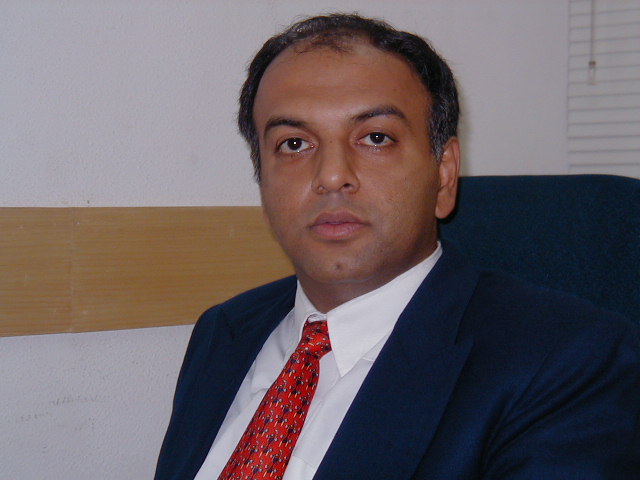
Following last week's email exchange with Sanjeev Bikhchandani, CEO of Naukri.com (according to Alexa, India's premier job site) I invited him to answer a couple of questions that might be of interest to the readers of this blog.
How has the response to RSS been?
We launched RSS less than a week ago. We have done no promotion of the feature - no press release, no ads, no banners on other sites - nothing. The only promotion is on naukri. So while it is a bit early, the response is as expected - a small number of tech savvy users of naukri have asked for RSS feeds and a few dozen more ask for it every day. We find it encouraging. Should RSS become a hygeine factor on web sites then we are happy to be there early. While a few hundred a week is a small number over several weeks it adds up and the cumulative RSS feeds going out after a few months will not be an insignificant number. What it also does for us is that ensures that you don't lose even an infrequent visitor to naukri or a passive job seeker so long as he came to you once and set the appropriate RSS feed.
What should we do about spam to registered users of naukri?
Emphasis in the posts is mine - Gautam.While there is no foolproof answer to spam we have taken several measures to minimise it.The first thing registered users of naukri should do is to set their privacy and mail options to the ones they want. You have already detailed these options out in this blog earlier so I will not repeat them here.In case you have made your resume searchable (to ensure a higher chance of finding a job you should go for this option) and you find that there is a client of naukri who is accessing your resume by searching our database and sending you irrelevant mail you can send a complaint to abuse@naukri.com. We go through each complaint and wherever we find a client stepping out of line we warn him and if he repeats his behaviour we may even suspend his subscription temporarily. In a few cases of extremely stubborn clients we have even cancelled subscriptions and have refunded the balance money. However to tell you the truth this is an evolving situation and there are some clients who are not very well versed with email ettiquette - so they have to be educated. It is still relatively early days of the internet in India for some users.We also have a few dozen dummy CVs of our own in our database. Should we get a spam mail from one of our clients at the email ids in the dummy CVs a flag goes up and we monitor the activity of that client closely and talk to him even if there is no complaint from a registered user.We have recently introduced SMS in our resume database. Instread of sending email to a registered user of naukri recruiters can send an SMS. SMS offers many benefits over email to recruiters - response is faster, open rates are higher - in effect you recruit more and faster. One difference - you pay for each SMS you send, whereas email is free. We feel smart clients will increasingly use SMS for the benefits it provides and because each SMS is paid for they will be targetted better than emails currently are. Simple economics.We are also planning a few other measures which we will announce closer to the time of implementation. We are focussing on the problem - every Monday we have a product planning meeting in our office and spam has featured prominently in our meetings for the last several weeks.Any ideas or suggestions will be welcome
I think they have a point in the SMS usage by recruiters. It'd be interesting to see how the job-seekers react to it. Would you respond better to a SMS by a recruiter than an e-mail?
Apr 1, 2006
Ooops, too late !
MBA'S MAY BE A MARKETING LIABILITY !
A Master of Business Administration degree is not only worthless, it can work against a marketer, according to a survey of marketing executives from 32 consumer-products companies by consulting firm Ken Coogan & Partners.
Subscribe to:
Comments (Atom)