Apr 28, 2020

#WorkLifeTV A conversation with Debu Mishra and Anuranjita Kumar on the Shape Of Work in the COVID19 era


My friend Debu Mishra reached out to me, saying that he was starting a YouTube channel called "WorkLifeTV" and wanted me to be to be his first guest along with Anuranjita Kumar (HR Leader, author and now a VC) 
        
We had a freewheeling conversation on how work is changing in current times.

An edited video of the conversation is embedded below


Apr 6, 2020

My video interview with peopleHum on #HRTech and related topics

I had an interesting conversation with Aishwarya of peopleHum on the state of the HR Technology market and aligned topics.


You can find the transcript of my interview on the peopleHum Blog too


And listen to the podcast here


Feb 10, 2020

People development and the role of the Manager in the Future of Work

In my last post I touched upon the fact that there needs to be a constant reskilling of people in the future of work, and this also impacts the role of the manager much more than before

The critical role of the First Line Manager

While leadership development remains a criteria for most organizations, an often neglected but critical (if not more) area is the development of the first line manager. In most organizations individual from the front line are promoted to the supervisor/manager roles based on their skills and performance in their role, not on the basis of an assessment of their "people management" skills. However the latter is the most critical skill ! A great salesperson is not always a great sales manager

What skills do managers (of all levels) need to develop?

I'll focus this post on the area of talent development. In most performance management systems the individual's development needs arise from a discussion between an individual and their manager. However in the future of work, we say the onus is on the individual to drive their own development. So what role should a manager play?

The number one skill a manager needs to develop is the ability to assess where the individual is in their career journey and where they are headed. For that, a core skill is the ability to listen and have conversations with each and every employee on the team on a regular basis. That means the manager has to play both the part of a mentor and a coach.

What does that mean?

Being a mentor means showing the person a path forward and telling them what skills are needed to develop to go down that path. It means recognising the strengths of each individual and telling them "Look, you are great in this, and therefore you should focus on these possible career moves"

Being a coach means asking each individual questions about what motivates them at work, what is their own purpose in life and what path do they see for themselves. It helps the individual to come to their conclusions themselves.

So, why doesn't that happen more often?

It is incredibly hard for organizations to assess the above skills in people when it comes to promoting people to supervisory and managerial roles. There can be a virtuous cycle when by chance a current manager has these skills and therefore can recognize these skills in people to be promoted. Or in most cases, unfortunately, a vicious cycle when a person who doesn't have the above skills goes ahead and promotes someone based solely on performance.

What can organizations do?

Explicitly state that these people assessment and development skills should be the primary focus on deciding who takes on a frontline manager role.

Create an alternate career path for people who are great at their roles but might not want/be suitable for developing people. In 99% of companies the only way to grow in your career is the managerial route, which is why so many people are disengaged at work as their development is not a priority for their managers

Here's a great video by Julie Winkle Guilioni on what managers can do help people to own their career development

Jan 29, 2020

The Dark Side of the #HRTech driven #DigitalTransformation and #FutureOfWork we prefer to not talk about


I try to attend a couple of HR Technology conferences every year:n SHRM's Tech Conference, and People Matters' TechHR Conference.

These conferences are unlike the more traditional HR Conferences. There's a different energy, with international speakers, a dedicated venue for HR Tech startups, Angel Investors hearing pitches, in addition to the traditional sponsors.

Every speaker and participant is gung-ho about the amazing difference technology can make to employees and the workplace. How it will free us of boring repetitive tasks to focus on truly creative and strategic tasks.

Some of the things that HR leaders often say in such conferences are (and I paraphrase):

"We need to reskill our employees to get them ready for the coming future of work"
"We need to embrace an agile mindset and prioritise digital transformation for putting employee experience at the centre of everything we do"
"We need to deploy tools like AI and ML and chatbots to better hire, engage and service  our employees and leaders"
"Technology will free us from the shackles of a physical workspace, enabling all of us to be masters of our time and destiny creating a rising gig economy" 
I agree, all these are correct, but once in a while I wish, people would focus on the inevitable disappointments inflated expectations will bring. There is a "law" attributed to American researcher Roy Amara, commonly known as Amara's Law which says: "We tend to overestimate the effect of a technology in the short run and underestimate the effect in the long run."

Technology does not move in linearly. Every technology adopted by humans (from cooking food in fire to agriculture down to industrial and now to the interconnected digital world) has also profoundly changed our society for the better and for the worse. You can't really have one without the other.

Before I go any further, it would be a good point to remember that while we collectively have changed beyond recognition over the last couple of millennia, our brains haven't evolved at a neurological level much beyond our hunter gatherer days.
When faced with perceived danger of any kind, our amygdala, takes over with a "fight or flight" response. We still can't form more than 150 meaningful relationships (irrespective of the number of friends you have on Facebook or WhatsApp or LinkedIn). That number is called Dunbar's number, you can read about why that is the case here.

In my opinion we should have more conversations about the following in the context of the future of work:

  • Digital Transformation is hard to get right. According to consulting firm McKinsey the average success rate across industries is about 30%. That is because digital transformation requires a concerted effort  from every part of the organization, which might be at varying degrees of digital fluency. HR people are aware how a process or structural change initiative can falter, now imagine changing processes, technology and culture all at the same time.
  • Let's address the elephant in the room: Job losses, changes in work due to automation and reskilling. Depending on which report you read, the numbers are widely different. But here's an example. At a panel on HR for Industry 4.0, a person who was in HR at a paints company shared this example: The company selected a location in a North Indian state to set up a new plant. The state government was overjoyed when they heard the proposed output of the plant. However when the plant came up, it was so automated that it required just 200 people to manage it than what the policy makers expected  would be 1000-1200 people. The skills to run such a plant were not available locally too, and the only direct local employment were in areas like building security, cooks and gardening.  So yes, automation and AI will create new jobs, but most often than not the workers they displace will not be able to reskill fast enough. And it will not be a one time reskilling either. As the rate of pace keeps accelerating people will need to keep adding skills and reinventing themselves again and again. The impact that will have on the mental health of such people and the larger impact and stress it will put on the communities and social fabric is a topic that is brushed under the carpet. It has happened before too: Clay Shirky called it "Cognitive Surplus". Read a detailed summary here.
  • It's also worth remembering that global companies with very deep pockets and a relatively higher skilled workforce would be able to carry out the reskilling with much less pain, if their stocks are not hammered in the stock markets, that is. It is also a fact that most employed people are in the Micro, Small and Medium sectors, which may or may not be able to afford it, even if they want to. 
  • I have covered some of the issues of the rise of the gig economy in my earlier blog post here. See specially point number 10, in that post.
  • Let's face it, in my personal opinion, most HR people are not very comfortable with technology or digitally savvy. Most are risk averse and simply implement the HR module of the ERP solution they are already deploying. That's because the speakers at the HR Tech conferences are outliers, the innovators, and believing that some HR leaders are representative of the larger community, would be a mistake. HR Tech vendors should therefore stop thinking of these innovators as the normal and get their hands on Geoffrey Moore's classic book "Crossing the Chasm"
  • After which we come to the vendors, and some blame should be shared by the HR buyers also for falling to the "new shiny object" syndrome. The big issue with vendors, specially those working on point solutions, is that they don't have anyone in the founders who have worked in HR. Therefore they think they have a solution which meets their needs (primarily arising  out of the pain points they have themselves felt as candidates or employees) without really understanding the dependencies and processes that need to be addressed before either Candidate Experience/Employee Experience can be improved solely on the basis of technology. Finding a client who is willing to experiment with a new, unproven solution is being very lucky. Vendors need to be open to customising their product and not say "take it or leave it". Another reason many CHROs hesitate to try a new HR Tech startup is they do not want to be investing time, people, data and significant resources to a startup only to find 18 months later that it has shut down because it burned cash and couldn't raise additional funding or has been acquired by a larger player who might turn the tech for other uses, or just been acqui-hired. Vendors need to be open about their product roadmap and funding situation. Those who don't do that impact the others in the ecosystem. In the case of Artificial Intelligence in HR enough has been said about relying on past data leading to reinforcing existing biases.

This is not a rant. At least I didn't mean it to be :)

These are some aspects I think that we as a HR and HR Tech community need to be having conversations about so that we don't rush in where angels fear to tread :)

What do you think? Where would you disagree with me? 

Jan 27, 2020

Can "Kindness" be a goal for the HR professional?

Josh Bersin is one of the foremost thinkers of HR in the contemporary world. Having followed him from his HR analyst days, through his firm's acquisition by Deloitte, and now to his newest avatar with the Bersin Academy, whatever Josh thinks about the future of HR, you can be sure that global CHROs will pay attention/

Which is why his article yesterday on "Our new role: Bringing Kindness to Work" made me sit up and take notice.

As Josh says:

People want meaningful jobs, fair pay, transparency, and growth. But most of all, they want kindness. Kindness? What role does that play in a business? It turns out kindness at work has now become fundamental. While inclusion, fair pay, and development remain important, kindness and connection are now essential.
the most important things in our lives are compassion, empathy, forgiveness, gratitude, mindfulness, social connection, and awe. These are all human issues, and all revolve around kindness. For me, it was a wake-up call. After two decades of meeting with hundreds of companies, I realized I had never seen these words in company mission statements, competency models or leadership values.
Josh then offers five questions for leaders and HR people to ask themselves to reflect if they are building kind and compassionate workplaces.

Here are my thoughts:

  • "Kindness" is a function of organizational culture and is also shaped by external societal culture of the zeitgeist. The organizational culture is shaped by the personality of the founder/entrepreneur of the organization which translates into what behaviours which are role-modelled by others. 
  • A culture of kindness is also shaped by the culture of the industry. A sales driven competitive culture seeps across most of the companies in that industry as people switch roles within that industry
  • As Josh mentions, looking at hiring people, assessing and then promoting people for how they treat others should be the cornerstone of HR systems and processes.
  • The scary research is that organizational systems of focusing on the short term shareholder gains often reinforce psychopathic behaviors. A search for psychopathic behavior in the workplace will showcase how often senior executives and CEOs who rise up to the top exhibit psychopathtic behaviors. Read this 2004 HBR article, for example/ 
  • While I am glad Josh is throwing light on this very important area, let is not be in the illusion that it is going to be easy to create more kindness in the organization. We have to create new cultures, new role models and new structures and processes to build a kinder and more compassionate workplaces of the future.
What do you think? Leave your thoughts in comments section below

Jan 21, 2020

Making it to Rise.Global's list of Top 10 HR Influencers of January

You can find the full list here.

Top 10 HR people to follow in 2020

I was pleasantly surprised when Staffing Software and Applicant Tracking System, iSmartRecruit included me in their list of 10 HR people to follow in 2020

My new year resolution is to get back to blogging in a big way :)

quick guide to build


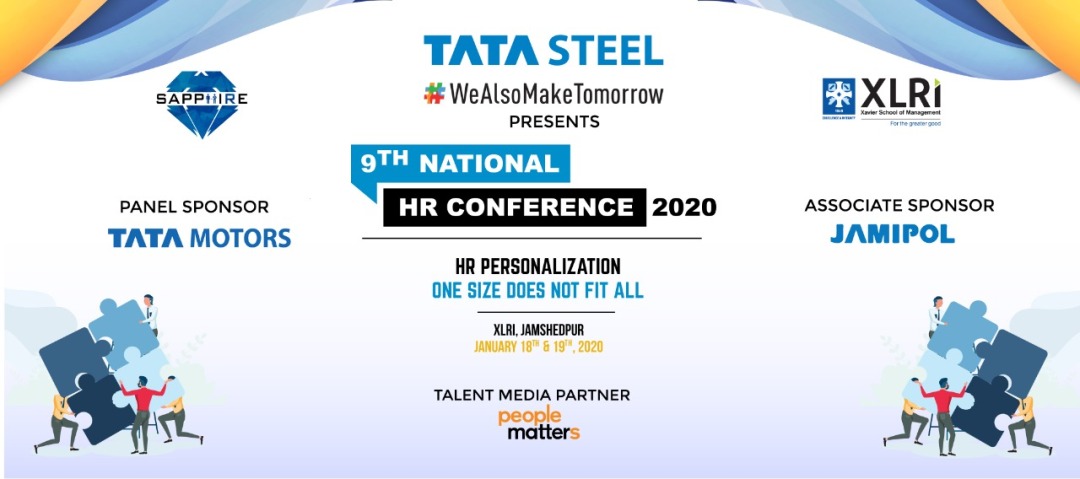
Recap of the panel on #gigeconomy at the 9th National HR Conference at XLRI

Last weekend I attended the 9th National HR Conference at XLRI, Jamshedpur.

Main poster

On 19th, I moderated a panel discussion on implications for HR in the era of the gig economy. The panelists were author and thought leader Abhijit Bhaduri, Shamita Chatterjee of Infosys, Suresh Tripathi of Tata Steel, Raj Narayan of Titan, Amitav Mukerji of ITC and Arvind Subramanian

Panelists at the HR conference on XLRI campus in Jamshedpur on Saturday

Some views shared by the panelists were:


  1. Gig Economy is a reality, and India is among the top three countries with gig workers
  2. Gig workers were always a reality, but now with certain platforms they can offer their skills across geographies (these are the knowledge based gig workers)
  3. Gig workers come in all varieties: from semi-skilled (like drivers, delivery boys) to master "karigars" (example of master jewellery makers was shared by Mr. Raj Narayan ). Abhijit called these high end gig workers as "gig artists)
  4. Suresh of Tata Steel shared an interesting experiment they were doing, where workers can use 20% of their work time to do an external gig, thereby building additional skills and supplementing their incomes
  5. Gig economy does give rise to a power law, specially in the high skills market, where a few players can corner a high gains than the rest
  6. Abhijit said that maybe we were looking in the wrong place for inspiration. He said that we should be looking at the Indian movie industry where 80% of the workforce is comprised of gig workers. (I had posted something on the same lines 16 years ago)
  7. Shamita of Infosys shared that thanks to fears about cybersecuity and data security, hiring gig workers on IT projects is actually going down.
  8. Amitav of ITC opined that for low skilled gig workers, there will be a new kind of collectivism that will rise. He gave the example of loaders in Maharashtra, known as "mathadis" who are organised under a welfare board, set up in compliance to the Maharashtra Hamal, Mathadi and other unprotected workers (Regulation of Employment and Welfare) Act 1969. 
  9. On a question about the Labour Laws lagging behind the reality of the gig workforce, the members of the panel agreed that the law will evolve and HR leaders have to have a constant dialogue with policy makers and educate them about the new reality
  10. There were concerns from the audience about the lack of a safety net for gig workers and the psychological aspect of not being part of a workforce, as well as the need for constant reskilling to remain relevant. Amitav said there was a business opportunity for companies who could make products like a pension scheme and insurance schemes for gig workers. Support networks for identity and mental health of gig workers were also pointed out as a necessity, especially those gig workers who are subject to the tyranny of algorithms
I might be missing out on some points, but I guess I've covered the big points in this post.

Here's a news item on the conference in The Telegraph 


Jan 9, 2019

Thoughts for 2019

It's been a week and a day since 2019 started. I have mostly been hibernating metaphorically. Mostly because the whole greeting everyone "Happy New year" feels not-quite-genuine

Resolutions are also not my style.

However, I have been reading and ruminating. Here are some thoughts that I think are going to happen in 2019

Benefits and Wellness are going to be big in 2019: This is personal experience . Two Benefits providers have approached me in January which means they are ready to spend money to promote it

Specific HR Tech solutions become more relevant: point solutions offer more details for specific solutions . Which is why many #HRTech solutions will be integrated with the larger suites like Workday , SAP SuccessFactors

Analytics will be front and centre: to take any advantage analytics in HR will need be to be cleaned up and answered.

Talent Acquisition and Learning will lead the way for tech adoption: Recruiting has always been the arrowhead for tech adoption.. they are also been for HR Tech adoption