Today Facebook enabled the pages that had less than 1000 fans to get a simple username.
However the pages needed to have more than 100 fans to be considered.
Thankfully a tweet and a Facebook appeal ensured that my number crossed from the 80 fans to 102 now - and now the URL to remember is http://www.facebook.com/HR.Blogger to get an update on what I am blogging or reading about.
Hope to see you there!
Jun 29, 2009

HR Consulting news: Towers Watson: Towers Perrin and Watson Wyatt to merge
Ok, this is an interesting development, and I guess makes sense in this season of economic recession.Towers Perrin and Watson Wyatt will merge to form Towers Watson.
Watson Wyatt has an Indian presence, while Towers Perrin does not. However it does stuff related to salary surveys with Cerebrus Consultants in India.
So I don't think Watson Wyatt India will be impacted by this merger, but am guessing that globally there would be redundancies specially in overlapping service lines.
As the WSJ reports:
Watson Wyatt has an Indian presence, while Towers Perrin does not. However it does stuff related to salary surveys with Cerebrus Consultants in India.
So I don't think Watson Wyatt India will be impacted by this merger, but am guessing that globally there would be redundancies specially in overlapping service lines.
As the WSJ reports:
The combined company, to be called Towers Watson & Co., will have annual sales of about $3.2 billion with 14,000 employees. It will be publicly listed, as is Watson Wyatt. Towers Perrin is closely held.
The merger will create the world's biggest employee-benefits consultancy, displacing the Mercer unit of Marsh & McLennan Cos., according to Shlomo Rosenbaum, an analyst at Stifel, Nicolaus & Co. Before Sunday's announcement, Watson Wyatt held second place, while Towers Perrin ranked fifth among global providers of employee benefits advice, he said.
Watson Wyatt is a strong player in pension consulting, while Towers Perrin is stronger in health-care consulting than Watson Wyatt, Mr. Rosenbaum said. He said it is unclear whether the firms will "be able to cross-sell products that the other one does not sell".
Jun 28, 2009
Thoughts on Social Recruiting
Recently there was a Social Recruiting Summit held in the US at Google organized by ERE.
If you haven't heard of it so far, social recruiting being the use of social media and networking tools to engage prospective candidates (as Michael Specht defines it) with your organization and form a talent pipeline you might select from later.
Of course, social recruiting as a concept is not new.
Headhunters and Corporate recruiters have for over the last century cultivated networks using phones and rolodex - but the boost that the internet has given to communication, first with email then with social media tools and now with social networking has made this quite easy for recruiters of all stripes to cultivate their networks. You don't need to be part of the old boys network and to take out A list candidates to five star lunches to cultivate your network.
In fact as a corporate recruiter the Microsoft JobsBlog was one of the first dedicated approaches to social recruiting followed by Heather Hamilton's blog on MS Marketing careers.
Third Party recruiters like Dave Mendoza, Michael Kelemen were the first people I know of who used blogs, Linkedin to build their own expertise and reputation.
Now there is Facebook, Twitter and who knows what other social app round the corner.
The focus for recruiters using these tools has to be an ability to catch the next wave and speed and response to prospective candidates.
Whether you represent the 'corporate' recruiter or are headhunter (like Options Executive Search in India :-)) focusing on the people you want to impact is more important rather than focusing on the tools.
Guess great headhunters have always known that truth!
As a bonus here's a presentation that the Linkedin CEO made on Social Recruiting:
And another presentation by Michael Marlatt who is a corporate recruiter with Hewitt Associates in the US:
If you haven't heard of it so far, social recruiting being the use of social media and networking tools to engage prospective candidates (as Michael Specht defines it) with your organization and form a talent pipeline you might select from later.
Of course, social recruiting as a concept is not new.
Headhunters and Corporate recruiters have for over the last century cultivated networks using phones and rolodex - but the boost that the internet has given to communication, first with email then with social media tools and now with social networking has made this quite easy for recruiters of all stripes to cultivate their networks. You don't need to be part of the old boys network and to take out A list candidates to five star lunches to cultivate your network.
In fact as a corporate recruiter the Microsoft JobsBlog was one of the first dedicated approaches to social recruiting followed by Heather Hamilton's blog on MS Marketing careers.
Third Party recruiters like Dave Mendoza, Michael Kelemen were the first people I know of who used blogs, Linkedin to build their own expertise and reputation.
Now there is Facebook, Twitter and who knows what other social app round the corner.
The focus for recruiters using these tools has to be an ability to catch the next wave and speed and response to prospective candidates.
Whether you represent the 'corporate' recruiter or are headhunter (like Options Executive Search in India :-)) focusing on the people you want to impact is more important rather than focusing on the tools.
Guess great headhunters have always known that truth!
As a bonus here's a presentation that the Linkedin CEO made on Social Recruiting:
And another presentation by Michael Marlatt who is a corporate recruiter with Hewitt Associates in the US:
Why blame the boss asks Sidin Vadukut
Sidin Vadukut posts about why people tend to blame the boss in his column Cubiclenama; quoting a HR consultant with a secret identity ;-)
A dear friend and human resources consultant, GG, explained the phenomenon in interesting terms: “Well the simple answer is an old psychological theory: called theory of attribution. People attribute good results to themselves and bad results to external factors. Top management will therefore get blamed for everything that goes wrong—because we also like attributing blame on people rather than abstract concepts like privatization, global recession.”
And what should companies do? “One thing is to stop building up ‘great CEOs’ as brands. That makes the backlash stronger,” opined the wise GG.
So what do you do when the airline that is your company, hits a patch of bad weather that is the economic slump, and is forced to emergency land at the airport that is corporate restructuring? Do you join in the healing process? Or merely blame the management for all ills, quickly cash all expense vouchers and sell the company stock you bought in dad-in-law’s name? Send us email please.
Workforce Diversity
It's Queer Pride in Delhi today - an occasion for the minority of Lesbian, Gay, Bisexual and Transsexual (LGBT) to come out and also for those supporting them to demand basic rights.
Read more here.
A lot of time in the workplace we talk about encouraging diversity. Diversity of race. Diversity of gender. Diversity of religion. And now in India a growing consciousness of diversity of caste too.
But the diversity of sexual orientation is never mentioned, at least not in India.
One may ask, what's the big deal about diversity of hiring people? Is it just because it is seen as being good to do?
What's the business result of diversity?
According to me there are two spin-offs of diversity:
Read more here.
A lot of time in the workplace we talk about encouraging diversity. Diversity of race. Diversity of gender. Diversity of religion. And now in India a growing consciousness of diversity of caste too.
But the diversity of sexual orientation is never mentioned, at least not in India.
One may ask, what's the big deal about diversity of hiring people? Is it just because it is seen as being good to do?
What's the business result of diversity?
According to me there are two spin-offs of diversity:
- As your client base becomes more and more diversity you need to reflect that diversity internally, or at least have people who can advise you on their needs.
- Diversity of people, leads to diversity of thought and mindsets - which should hopefully lead to better decisions for the business.
However to really implement diversity and benefit from it inclusion processes in the organization should help people to confront their biases and stereotypes - and then work together to ensure that diversity is included in the decision making process.
What do you think? What are some inclusion building process so that visible and not so visible minorities become truly integrated?
Jun 25, 2009
The Coach of Silicon Valley
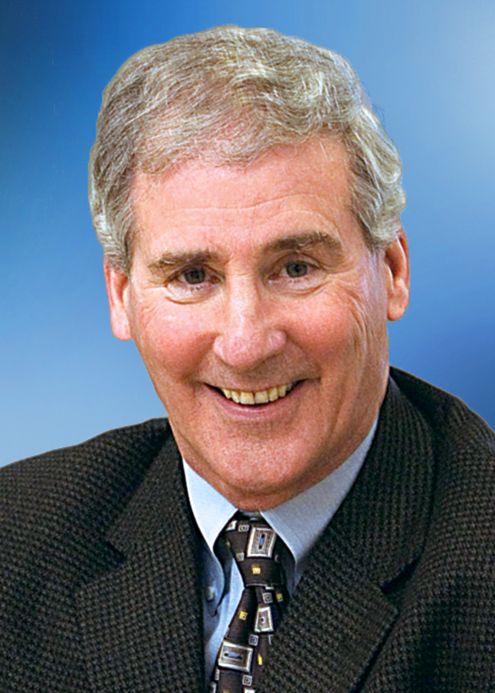
Whom do Steve Jobs and Eric Schmidt turn to advice?
The same guy, apparently. Their executive coach.
From a really interesting article, which I suggest you read in totality:
Campbell has served as the secret glue helping bind Schmidt to two other rather important executives, founders Larry Page and Sergey Brin, enabling them to make decisions together despite their sometimes radically different perspectives. He has helped mold a process by which the three work out issues privately, then come together as a united front behind the best choice. Note: This is not consensus-building. "No one was selling out," Sacca says. "They had just been taught this amazing art of decision-making where you express your dissent, lobby each other, hear everyone out, and then get to a decision. There's no doubt that it was all Coach.
An important element of Campbell's teachings is the system he's developed for reviewing employees, which many of the executives he mentors now use. Rather than simply focusing on whether a manager has achieved his financial goals - which can lead to short-term thinking - Campbell gives equal weight to four areas. The first is traditional: performing against expectations. But then he looks at management skills, working with peers, and innovating. If you aren't good at all those things, you aren't good. "He taught me that you can increase operating earnings but not fund R&D," says Opsware's Horowitz. "You may meet your goals, but you may be such a jackass that none of the people that depend on you can meet your objectives. Bill figured out a way around this."
For Schmidt and others, having a foulmouthed angel on their shoulder - one who isn't on the payroll, with no overt political agenda - is a dream come true. "He loves people, and he loves growing people," says Jobs. "He went from being one of the prize stalks of corn on the farm to being the farmer." At Apple, Campbell is not just a board member; he's also Jobs' friend, and the two take regular Sunday walks around the streets near their homes in Palo Alto, where Jobs says they discuss "the things that have got me concerned and things I haven't yet figured out." Of particular interest to Jobs is Campbell's marketing background, as well as his magical impact on the troops. "He has learned to get A and B work out of people," says Jobs. "And Apple doesn't make four billion semiconductors. Apple is only its ideas - which is only its people." One executive who knows both men well says that Jobs trusts Campbell completely. "Bill is nonthreatening," he says.
"How does someone create a rapport where that person comes away believing that Bill cares about him first and foremost?" wonders Randy Komisar, a partner at Kleiner Perkins who has worked with Campbell at several companies. "Bill's impact in the end will be very hard to measure, but it is really important. It won't be in the legacy of a GE; it won't be in the more classic sense of putting points on the board. It will be in seeing the people he's touched go off to do great things."So now I have another role model, apart from Ram Charan :-) Bill Campbell
Jun 20, 2009
Sample Social Media Policy
Lots of businesses are grappling with social media and how to draw up a policy - well here's an interesting 'social media policy' that Headset Bros (a company that sells headsets) has drawn up.
Take a look, it's simple and easy to understand :-)
Time you got yourself a social media policy like this, isn't it?
HEADSET BROS – SOCIAL MEDIA POLICY
Take a look, it's simple and easy to understand :-)
Time you got yourself a social media policy like this, isn't it?
HEADSET BROS – SOCIAL MEDIA POLICY
Jun 17, 2009
Employees Employers and Social Media
Abhijit Bhaduri posts on his blog post Tweet Nothings
The power of the social media is creating a new set of ethical dilemmas with no clear guidelines. Most employers want to know during an interview why the candidate is looking for a change. Anything that cannot be supported by data is an opinion. Hence if the employee shares opinions about their current employer, their policies and the culture or a potential product line being shut down, is that wrong? Or does it become more wrong if it is put up on the Net. Remember, there is no such thing as a delete button on the Net. So a photo of a wild college party will be available to your future employer when they do a reference check about you. Some innocuous “friend” who knows intimate secrets about your online adventures may turn out to be your team member/ colleague/ manager someday. So the word of caution to employers and employees alike: Don’t do anything that would make you squirm if it made the headlines of every newspaper and TV channel in the world and where the anchors or scribes are your sworn enemies. Till you know what is good for you stick to Tweet Nothings.
How to Achieve Employee Engagement
A lot of factors go into creating Employee Engagement. Primarily they can be either internal or external to the employee.
The internal factors are obviously difficult for an employer/manager to influence - but still there is something that as a Manager/HR professional you can do to influence it - help people reflect and find out more about themselves, either through tools like questionnaires/instruments or reflective conversations with Executive Coaches.
Once a person has that insight about himself, crafting (or sculpting a job ) would be the ideal way to go ahead, however life is not ideal.
Hence next steps are usually about identifying what is the role one should target towards and then developing one's skills and working towards it.
Most people hesitate in making a career shift after they have invested in a decade in a chosen function. They want to play safe. An organization can make this career transition easy by supporting capability development, even in times of economic recession.
As far as external factors are considered, an organizational culture that is uniform across groups, and seen to be fair is critical to building employee engagement.
People want to both have skills as well as employ them.
Helping people discover their flow - by increasing challenge as they build their skill is critical to people really being engaged at work.
It's not so much about free lunches , free laundry and games at work.
The other thing that organizations need to do is encourage organizational citizenship behaviors.
However the biggest thing organizations and managers have to realize that engagement is not a one way street. Expecting employee engagement also means being actively engaged with the employee also. It means understanding and keeping conversation with the employee open at all times.
It does not mean making a counter offer when a person puts in his resignation anytime - that is behavior which stems from the 'employee as mercenary' model - and engagement once broken - like trust - is unlikely to be set right anytime soon.
The internal factors are obviously difficult for an employer/manager to influence - but still there is something that as a Manager/HR professional you can do to influence it - help people reflect and find out more about themselves, either through tools like questionnaires/instruments or reflective conversations with Executive Coaches.
Once a person has that insight about himself, crafting (or sculpting a job ) would be the ideal way to go ahead, however life is not ideal.
Hence next steps are usually about identifying what is the role one should target towards and then developing one's skills and working towards it.
Most people hesitate in making a career shift after they have invested in a decade in a chosen function. They want to play safe. An organization can make this career transition easy by supporting capability development, even in times of economic recession.
As far as external factors are considered, an organizational culture that is uniform across groups, and seen to be fair is critical to building employee engagement.
People want to both have skills as well as employ them.
Helping people discover their flow - by increasing challenge as they build their skill is critical to people really being engaged at work.
It's not so much about free lunches , free laundry and games at work.
The other thing that organizations need to do is encourage organizational citizenship behaviors.
However the biggest thing organizations and managers have to realize that engagement is not a one way street. Expecting employee engagement also means being actively engaged with the employee also. It means understanding and keeping conversation with the employee open at all times.
It does not mean making a counter offer when a person puts in his resignation anytime - that is behavior which stems from the 'employee as mercenary' model - and engagement once broken - like trust - is unlikely to be set right anytime soon.
Jun 15, 2009
Vacation, Twitter and Facebook
In case you've been wondering what's happened to this blog, I've been on vacation to my hometown of Lucknow, spending time with family and old friends, and feasting on Awadhi cuisine :D
That means I haven't been near a computer to blog (except today) but since I have my mobile phone I've been active on Twitter. Yes, I am addicted to social media and I guess it helps me to relax :-)
The other thing that dragged me to a computer was to get my own vanity URL at Facebook. So now I can tell people to find me at http://www.facebook.com/gautamghosh :-)
The things social media gets us to do, I tell you !
If you still haven't got your Facebook username go to http://www.facebook.com/username :-)
So my question for you is, what do you do to relax? Is it part of your work?
Do you know the answer to that question for your employees?
That means I haven't been near a computer to blog (except today) but since I have my mobile phone I've been active on Twitter. Yes, I am addicted to social media and I guess it helps me to relax :-)
The other thing that dragged me to a computer was to get my own vanity URL at Facebook. So now I can tell people to find me at http://www.facebook.com/gautamghosh :-)
The things social media gets us to do, I tell you !
If you still haven't got your Facebook username go to http://www.facebook.com/username :-)
So my question for you is, what do you do to relax? Is it part of your work?
Do you know the answer to that question for your employees?
Jun 9, 2009
Secrecy
Consultant Ninja has an interesting post comparing the way other professions are open and share knowledge compared to consulting:
As he says:
There is no body of knowledge that a consultant needs to understand and practice to be called a consultant, unlike say a Doctor, Chartered Accountant or Project Manager. There are no universally accepted certifications too.
In fact even management is not a profession by these standards :-)
As he says:
Well, there are a couple if interesting comments there, and I agree with the one that says that Consulting is a profession.
In short, the management consulting industry has no means of independently evaluating and rigorously defending logic & analysis.
- Conclusions are never shared outside the client
- Books & articles are filled with bland platitudes
- Clients rarely share decks from prior work from previous consultancies
- Internal Knowledge management systems are universally pathetic
There is no body of knowledge that a consultant needs to understand and practice to be called a consultant, unlike say a Doctor, Chartered Accountant or Project Manager. There are no universally accepted certifications too.
In fact even management is not a profession by these standards :-)
Jun 8, 2009
A salesman's story
My friend Diptakirti posts a brilliant piece on his blog about how he discovered his passion for sales.
Here are some gems:
If you do blog about it, leave a comment here with your URL. Will link to your post as well.
Here are some gems:
So what made you discover your passion in your job?
Any shreds of doubt I may have harboured in my mind about a career in Sales & Marketing vanished the moment I entered the Patna godown of my company as a freshly confirmed Area Sales Manager. The guard stood up and gave me a cracking salute!
People have strange reasons for doing strange things, which they are loath to admit. But to be perfectly honest, the communal standing-up of the staff whenever ASM-saheb entered was a very important reason for me. That - and the Murgh Malai Kabab at Hotel Chanakya.
It is in the United States of Bihar (including today's Jharkhand as well) that I became a hard-nosed salesman who saw it all. Kidnapped distributors. Rifles at contract terminations. Diverted trucks. Bounced DDs. I saw it all with a childish glee. And wrote about it as well.
So, what kept me in Sales & Marketing?
The most important reason is, of course, that I have reached a state where I thank my lucky stars that I love doing what I do because I have now become unemployable in other jobs.
Also, this is one job that never gets the limelight but never the sack either. So, when hot-shot I-bankers careen wildly between million dollar bonuses and bankruptcy filings, Brand Managers of soaps & oils remain solidly in a band of 10% growth in sales volumes, salary increase and body weight. Even if we did have the brains to trade in currencies & commodities, we certainly don't have the balls!
The third reason is probably that in no other profession do you get to meet so many interesting (read: crazy) people and go to so many exotic (read: inhabitable) places. In all my sales stints, I used to churn out monthly newsletters, which got forwarded far and wide. The people who complimented me for my imagination probably never realised that I was reporting the truth, the whole truth and nothing but the truth!
If you do blog about it, leave a comment here with your URL. Will link to your post as well.
IT firms dupe employees
Abhishek Rungta an IT entrepreneur tweeted me these two disturbing stories that took place in Kolkata.
The first one says :
The other says :
As Abhishek says, incidents like these are hitting the level of trust between employee and employer in the IT industry in India.
So what can you do?
If as an employee you are asked to furnish a security deposit at your firm, be sure that the firm is recognized. Does it have a certification/documentation. What about a legal team? Is the security deposit guarantee signed on legal documents?
I personally am against firms taking any kind of 'security deposits'. I think they are a stupid and short sighted measure. They denote a lack of trust.
However, with the bleak economic scenario I guess employees are prepared to accept terms and conditions without questioning - and that is something we should guard against.
The first one says :
An unlicensed software company that had been operating out of Bengal’s IT hub for three years without the authorities noticing is being investigated for cheating campus recruits of their security deposits and salaries.
Trainees of INFOGEN Global filed an FIR with Bidhannagar East police station on Tuesday against “chief visionary” Anirban Ghosh and his management team for criminal breach of trust and fraud. The company, which has four offices in Salt Lake, had recruited them as software developers last year for an annual pay package of Rs 84,000 each but hasn’t paid them a rupee so far.
The other says :
Over 700 employees and 228 trainees of Assurgent Technology Solutions Pvt. Ltd have complained that they were recruited through campus placements, made to pay Rs 1 lakh as security deposit, but then denied their dues.
The tech firm set up in 2005, dealing with software development, sales management and KPO, is now shut and its managers are absconding.
Officers of Bidhannagar East police station contacted their counterparts in Durgapur, where similar complaints had been registered against the branch office of Assurgent Technology. Sreejan Chatterjee, the branch in-charge of the Durgapur office, was arrested late on Thursday.
As Abhishek says, incidents like these are hitting the level of trust between employee and employer in the IT industry in India.
So what can you do?
If as an employee you are asked to furnish a security deposit at your firm, be sure that the firm is recognized. Does it have a certification/documentation. What about a legal team? Is the security deposit guarantee signed on legal documents?
I personally am against firms taking any kind of 'security deposits'. I think they are a stupid and short sighted measure. They denote a lack of trust.
However, with the bleak economic scenario I guess employees are prepared to accept terms and conditions without questioning - and that is something we should guard against.
Jun 7, 2009
Infosys' Succession Plans
Interesting article in Forbes India (a welcome addition to the range of Indian business magazines) on how IT behemoth Infosys is going through as it tries to put into place a succession plan from its founders to the next generation over the next decade:
Starting August 20, 2011, when Murthy will retire, the old guard will start putting more and more of Infosys in the hands of the new leadership. Within the next decade the remaining founders, who are now in their mid-50s, will start retiring too. The bench of leaders is already deep. Infosys Leadership Institute (ILI) has helped the company’s board to identify 50 senior executives. The founders as well as Infosys veterans Mohandas Pai and Srinath Batni each will groom a few of them. Kakal is one of the eight people being mentored by Murthy. “The key that we look at is consistent performance, because that gives a good indication of his ability to run a long-term marathon. The second, is he building something which is of long-term value?” says Girish Vaidya, who heads ILI.
Infosys without its founders at the helm is a difficult animal to define — a bit like Apple without Steve Jobs or Microsoft minus Bill Gates. No one quite knows how the transition will pan out. There’s a chance that it may not be as orderly as most things inside Infosys tend to be.
“I have been associated with founder-managed companies. The succession issue is a very difficult one, loaded with emotions and personal factors. It doesn’t go like a Swiss clock watch,” says Claude Smadja, independent director on the Infosys Board and president of Smadja & Associates Strategic Advisory.
For over three decades, all the key operational roles have been looked after by one of the founders. Murthy ran a very tight ship which had little space for anyone beyond the circle of founders. In three decades, only three professionals — Phaneesh Murthy, Batni and Pai — could get a seat on the Board.
Nadal and Federer
As I blog this, Federer has won the French Open final. A final that was possible because a little known player beat the king of clay, Rafael Nadal.
Nadal's comment is a great insight on what goes through a champion's mind when winning becomes a second nature. From the Times sports page :
The point of this post?

Career success can help you grow a lot. But sometimes failure can bring its own lessons. One must look beyond the pain of the loss and internalise that lesson.
Like Federer has had to .
Nadal's comment is a great insight on what goes through a champion's mind when winning becomes a second nature. From the Times sports page :
Then came his quote, one of the more revelatory to emerge from a post-match press conference, occasions that typically incubate soulless banalities: “Defeats never make you grow, but you also realise how difficult what I achieved up until today was, and this is something you need sometimes. You need a defeat to give the value to your victories.”
And it was that last sentiment that penetrated the deepest, many discerning something vaguely Kipling-esque in its powerful simplicity. “You need a defeat to give the value to your victories.”
None of this is to dispute that Nadal would have enjoyed victory at this year's French Open. He would have felt a palpable sense of elation and marvelled at how his name was being writ ever larger into the iconography of the game he so dearly loves. But would it have compared to the virginal emotions of his first victory, or even his second or third? Would it mean quite as much if he were defending his title for the tenth or fifteenth time?
Defeat is a precious gift to the all-conquering sportsman: an opportunity to learn, to adapt, to develop. But ultimately it is an opportunity to rediscover the essential meaning of victory. That is why Nadal will return stronger, deeper and hungrier.
Nothing pleaseth but rare accidents.
The point of this post?

Career success can help you grow a lot. But sometimes failure can bring its own lessons. One must look beyond the pain of the loss and internalise that lesson.
Like Federer has had to .
If Federer accepts that he is no longer the king the pressure comes off. Nadal becomes the man to beat, which leaves Federer more relaxed. Right now, Nadal is the Buddha with a tennis racquet. He has the confidence that comes from knowing you will win. “The winner is always relaxed,” says Dr. Gary Canivez, head of Apex Sports Psychology Services, and goes on to talk of Usain Bolt at the last Olympics: “He was effortless. You look at the other runners, and their faces show that they are straining. They are not efficient.”
Indians pessimistic about 2009?
This bit of news was a surprise. My take is that things have changed from the time when the survey was done in March. The same survey done now would be give quite a different result, IMHO
The hype over the recovery notwithstanding, packaged goods companies need to brace up for a tough year ahead, as a recent Boston Consulting Group study says consumers will save more and cut back on discretionary spends during the next 12 months.
The study done in March 2009 across a group of 1,800 urban consumers and 350 rural consumers with an annual income of over Rs 1 lakh stated that cuonsumers were pessimistic about the state of the economy and expected things to get worse.
Consumer spending, which had been growing at 10 per cent year-on-year, will now decrease. Over 34 per cent of the respondents said they would cut spends, while 16 per cent said would spend more in the coming year
Tech and Consulting most preferred by MBAs
According to this Hindu article Fortune says that Google followed by McKinsey & Co. are the top two most preferred by MBAs.
Incidentally the article makes a mistake when it says in the first part of article "Google has emerged as the world's top employer for MBA graduates for the third year in row, according to the Fortune magazine."
More from the article
Incidentally the article makes a mistake when it says in the first part of article "Google has emerged as the world's top employer for MBA graduates for the third year in row, according to the Fortune magazine."
More from the article
The search giant is followed by consulting firm McKinsey & Company (2nd), Bain & Co (third), financial services major Goldman Sachs Group (fourth), and tech giant Apple (fifth).
About McKinsey & Co, it said: "The management consulting firm has produced more chief executives than any other company worldwide and that's partly why it's ranked No. 1 or No. 2 among MBAs' most desirable employers every year since 1996."
Other companies in the top 10 are - The Boston Consulting Group (sixth), Walt Disney (7th), Nike (8th), JP Morgan (9th) and Johnson & Johnson (10th).
Further, tech giant Microsoft as been ranked at 12th place and it is even hiring amid the downturn with has positions for MBAs in marketing, finance, corporate strategy, development, sales and supply chain.
Soft drinks majors Coca-Cola and PepsiCo have been placed at the 19th and 20th spots in the list of 100 top employers for MBAs.
Jun 6, 2009
All employees are marketers in the age of Social Media
This post is triggered by uber blogger and PR thought leader Steve Rubel's talk which have been summarised here and here .
The main thrust of Steve's argument is the following:
The main thrust of Steve's argument is the following:
- People don't trust advertising as much as they used to
- People's trust in corporate press releases are low too
- People trust people whom they 'know' on social media (or Participatory media) as much as possible
- Employees (and not just 'external' facing employees) are becoming the people whom prospective customers trust a lot more.
So what does that mean for HR and Marketing?
If you and your Human Resources department do not realise the power that your employees have on the external branding of your firm, then it's time to take a crash course in social media, or nominate a CXO to look after social media , understand the risks , create a cultural change to achieve Distributed Influence . Understand the objectives and that social media is a tool .
I could come and talk to you too :)
Related posts:
Jun 4, 2009
Care to Subscribe?
If you’re viewing this via a web browser why not subscribe and get it as you want?
Want to get the posts sent via email? Just enter your email address here
Bloglines users: this one’s for YOU:

Or do you read blogs via Google Reader?

Or, how about pick any RSS reader of your choice?
 Subscribe in a reader
I’d love it if you’d consider subscribing.
Thank you so much!
Jun 3, 2009
New HR Blog Search Tool
Got this interesting mail from the folks at Halogen Software, they’ve used Google Custom Search engine to make a search tool for HR blogs.
So if you want to find out what does the Talentosphere (my word for the HR bloggers J) feel about an issue, search at the URL given below
Hi Gautam:
Just a quick note to let you know we’ve created an HR Blog search widget on Halogen’s website. HR professionals visiting our site can use it search the top HR blogs at once. We’ve included your blog in this search engine but if you think we’ve missed anyone, please let me know and we can add them. Here’s the link - feel free let your readers know this is available. I hope we can send some relevant traffic your way.
http://www.halogensoftware.com/resources/hr-blog-search/
What's your purpose?
An interesting interview at Management Consulting News, some excerpts:
So in your organization - what is your purpose? How do you understand that different from your vision and mission?
Roy Spence and Haley Rushing are coauthors of the bestseller,It's Not What You Sell, It's What You Stand For.
Spence: I believed that so many companies and products were going to become commodities that, at some point, the values and the purpose of the organization would become a critical decision factor for consumers.
I think that many of the companies in the news, including major banks, insurance companies, and car manufacturers, have lost or forgotten their purpose. Some of the big players lost their way and it’s costing this country dearly.
Rushing: A company needs profits to stay alive and fuel its activities, of course, but that’s not why it exists. And purpose is inherently more inspiring to people than money.
when people get up and go to work, they want to put their time and talent into something they can believe in.
If you give people something they can believe in, that will keep them engaged and committed. And they will go the extra mile, even if you don’t have the resources to reward them.
So in your organization - what is your purpose? How do you understand that different from your vision and mission?
Jun 2, 2009
Setting Expectations for Employees
As a manager how do you set expectations for results of your team?
If you obsess over the process of what they do, rather than what they do - it could give rise to a phenomenon which my ex-boss used to call "Operation successful, but the patient died"
Remember the middle name of KRA is "Results"
Focusing on what the result you expect at the end of the year is the best guidance you can give your team.
But you might say "Isn't the process as important as the result itself? I don't want people to break rules and achieve results. We are a "how and what" organization!"
To that the answer is - process needs to be communicated and adhered to separately, not via the KRA document.
Think about it - do you want every behavior you want people to comply with - and make a KRA list that's a length of a small novel - replete with "be a good manager" and "Be nice to customers" - or do you want to treat adults as - well- adults and let them make the choice of how to behave.
As a client shared recently - if you give people freedom to decide - there are chances that 2 out of 10 might misuse it - but that does not have to translate in making the other 8 suffer for it too.
Unfortunately most organizations end up making the majority pay for what the minority 'might do' - no wonder most organizations are stifling bureaucratic places in which people look forward to weekends and despise Mondays.
If you obsess over the process of what they do, rather than what they do - it could give rise to a phenomenon which my ex-boss used to call "Operation successful, but the patient died"
Remember the middle name of KRA is "Results"
Focusing on what the result you expect at the end of the year is the best guidance you can give your team.
But you might say "Isn't the process as important as the result itself? I don't want people to break rules and achieve results. We are a "how and what" organization!"
To that the answer is - process needs to be communicated and adhered to separately, not via the KRA document.
Think about it - do you want every behavior you want people to comply with - and make a KRA list that's a length of a small novel - replete with "be a good manager" and "Be nice to customers" - or do you want to treat adults as - well- adults and let them make the choice of how to behave.
As a client shared recently - if you give people freedom to decide - there are chances that 2 out of 10 might misuse it - but that does not have to translate in making the other 8 suffer for it too.
Unfortunately most organizations end up making the majority pay for what the minority 'might do' - no wonder most organizations are stifling bureaucratic places in which people look forward to weekends and despise Mondays.
Jun 1, 2009
Key Trends in HR Consulting in India
Interesting interview of the CEO Mercer HR Consulting in the Corporate Dossier
Some excerpts :
Some excerpts :
What are some of the key global trends in HR consulting that have come to light post recession?
I think we learnt in this environment what we knew already that keeping employees engaged is a critical part of business success. It is harder to keep employees engaged in times of such great uncertainty. So leadership is clearly having a huge burden to bear.
In that case, what is the future of leadership?
For instance, a client of ours here has an average age of 28 years. But very few of them, as much as they have leadership potential or leadership capabilities, have been leaders or have ever led through a time like this. Experience is critical to lead.
A balance is what is required. And flexibility is the key. We have seen wholesale layoffs in the recession. And there cannot be any substitutes to layoffs because you have to have your costs in line. But many companies have used more flexible ways. Companies that have highly trained employees, who are hard to replace, have done things like sabbaticals where they pay part of the person’s wage.
What should a company not neglect while restructuring?
Even when times are tough, companies should not neglect keeping an eye on the employee value proposition. There should be a level of transparency between the employer and the employee to keep the employee engaged. So if you focus on the employee and keep the employee happy, then by definition, you’re focusing on the client.
Subscribe to:
Comments (Atom)